Google Returns Notification Light Feature with Pixel 11 Pro Series
-
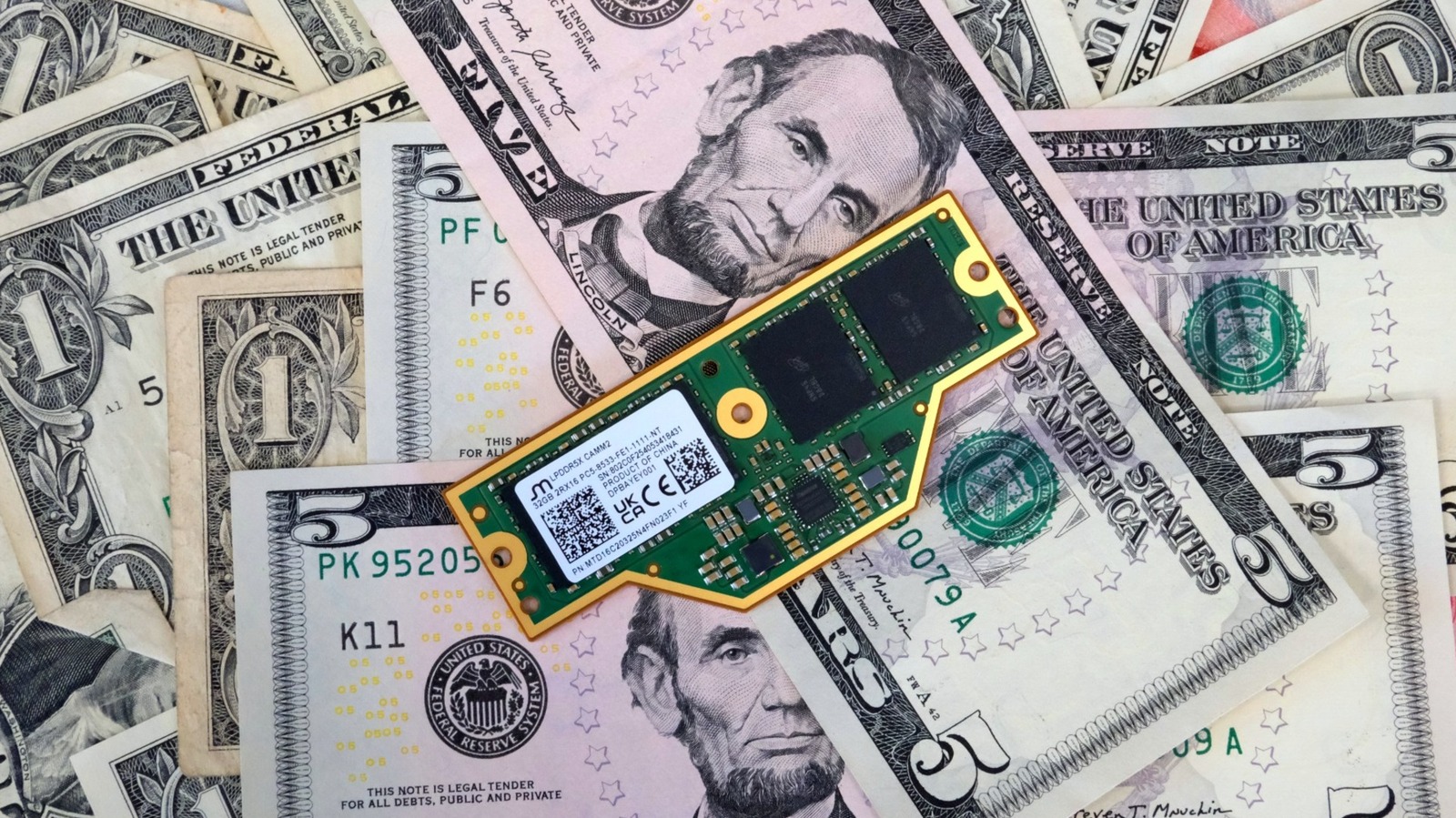
And when will they come back down again? In the last 18 months, the price of RAM has skyrocketed, and is expected to continue rising for the rest of the year. For something that's gotten cheaper pretty consistently since the '60s, the dramatic spike now is all the more unprecedented. There's a reason everyone's calling this the RAMpocalypse, because what used to be a cheap commodity has become a luxury item. It's why you're left having to pay more for every new phone, PC and tablet from now and for a long while to come.
Compare 1 other version
CNETLike every other corner of the broader tech industry, phone makers have had to grapple with the RAM shortage and subsequent increased prices for memory and other components. Google acknowledged the shortage, noting that its pricing reflects that current reality. For the record, Samsung said much the same, citing the RAM shortage to justify the price increase for its foldables that launched last month.
-
You want a notification light on your phone Google is bringing back my favorite long-forgotten, useful feature, the notification light, in a new form. The new Pixel 11 Pro series has HiLight, an array of ambient LED lights built around the camera's flash to "give you light-based communications on the back of the phone." So, when you keep your phone face down and receive a notification, you can know what it's about without turning the phone over.
-
Prices for the Pixel 11, Pixel 11 Pro, Pixel 11 Pro XL and Pixel 11 Pro Fold The Pixel 11 starts at $899 for 256GB of storage, which is the new entry point. While there’s no 128GB option, there is a higher 512GB option that’s new for this year, priced at $1,019, over $100 more.
Compare 1 other version
ZDNetYou'll pay more, but you'll also get twice the base storage with the new Google Pixel 11. It starts at 256GB of storage and 12 GB of RAM, compared to the Pixel 9's 128GB of storage for $799.
4 details only one outlet reported
Independent claims that didn't surface elsewhere in our corpus. Treat as supplementary — not corroborated across outlets.
-
01 Engadget But there's another type of RAM called HBM (High Bandwidth Memory), which is designed for high end computing environments. HBM is more advanced, a lot faster than standard DDR and packs in far more memory than you'd find on a standard stick of DRAM. The speed and capacity advantages HBM has makes it ideal for intensive workloads, which is why it's found in data centers and used for AI training.
-
02 ZDNet The elephant in the room The big question mark with a feature like HiLight is what more it will be able to do. Google hasn't had the best track record of maintaining products over the past decades; in this case, it replaced the temperature sensor that some users dearly loved, so I'm not holding my breath for HiLight to become anything significantly greater.
-
03 Wired Featured in this article Google may spend years testing the durability of its own hardware, but because accidents happen, you’d still be wise to get a good case for your Pixel 10 phone. Most devices in the Pixel 10 line—the Pixel 10, Pixel 10 Pro, Pixel 10 Pro XL, and Pixel 10 Pro Fold—use Corning's Gorilla Glass Victus 2. (The Pixel 10a uses Gorilla Glass 7i.) It's tough glass, but it's not indestructible, nor is it as strong as what you'd find on other flagship phones, like Samsung's Galaxy S26 Ultra or Apple's iPhone 17 Pro, which embeds ceramic nanocrystals into the glass for extra strength.
-
04 CNET A slew of new phones and gadgets were revealed at the Made by Google event on Wednesday, including new Pixel phones, a foldable, a smartwatch and a personal item tracker. Following industry trends, most of these are pricier than their predecessors.
Fact Corroboration
Which sources independently confirm the same facts. Hover a claim to see its sources, or a source to see what it corroborates.
Coverage by Perspective
Source Similarity
Connections show how similarly each outlet covered this story. Thicker lines = more similar framing.
Sources (4)
- zdnet
- cnet
- wired
- engadget