Apple Unveils New Mac Mini and Mac Studio Chip Configurations, Capitalizing on AI Boom
-
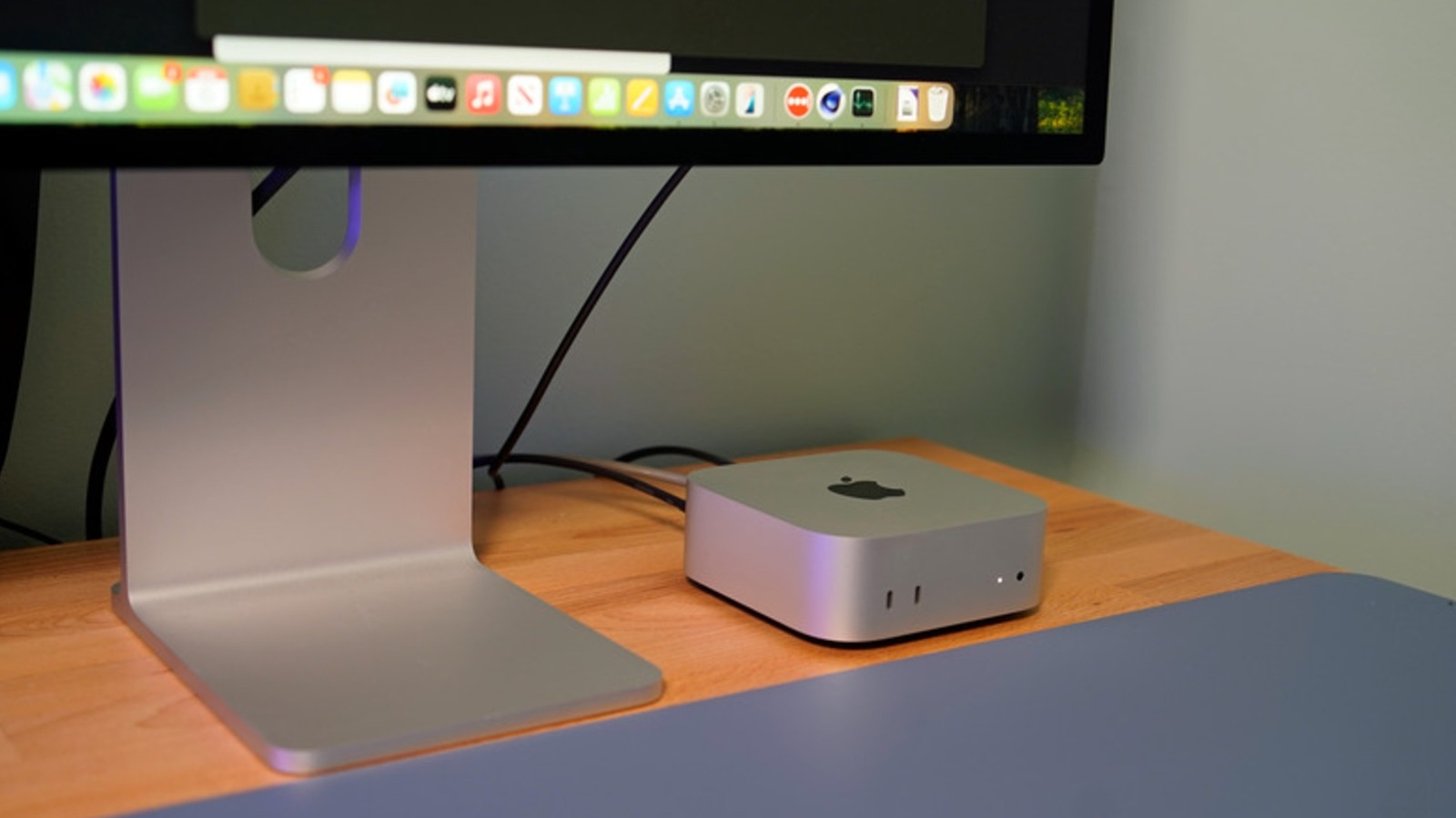
Apple announced on Tuesday a new range of chip configurations for its Mac Mini and Mac Studio desktop devices with the base M6 processor, M5 Max, and M5 Ultra chips. The latter is the company's most powerful chip to date, representing a new high-end processor tier with an 80-core GPU and four times faster LLM prompt performance compared to the M3 Ultra.
Compare 6 other versions
The VergeApple has announced two new processors, the M6 and M5 Ultra, as well as updated Mac Mini and Mac studio machines powered by them. The new machines are already available for preorder directly from Apple, with shipping for most configurations starting on September 22nd, 2026. The Mac Mini starts at $899, $300 more than the M4-equipped base model from 2024, and the Mac Studio starts at $2,499, the same price as the current M4 Max model.
CNETIn addition to launching a Mac Mini with a new M6 chip and Mac Studio with a new M5 Ultra, Apple brings its desktops into line with its MacBook Pro offerings, adding M5 Pro configurations for the Mini and M5 Max models for the Studio. Both the Mini and the Studio are identical to their predecessors physically: The performance and capabilities of the updated chips are the only changes.
Ars TechnicaToday, Apple announced new iterations of both desktops, along with two new chips: the M6, the first 2nm chip in Apple’s M-series lineup for Macs, and the M5 Ultra, now the most powerful chip in the lineup for most things—especially AI workloads.
TechCrunchApple announced two new processors on Tuesday, which power its new Mac Mini and Mac Studio models: the M5 Ultra and M6 chips.
WiredApple has announced fresh versions of the Mac Mini and Mac Studio desktop computers, alongside some new chips: the M6 and M5 Ultra.
EngadgetApple just launched the new M5 Ultra for the latest Mac Studio and as you'd expect, it's the fastest consumer processor the company has ever built. But how much speedier is it than its predecessor, the M3 Ultra? Let's dive in and see how Apple's latest super silicon measures up.
-
Sadly, the AI bubble and RAMpocalypse meant that the Mac mini became desirable to a whole different class of user. Apple Silicon's ability to run models locally made it a good alternative to racks of PC servers with GPUs. Its relatively low cost meant AI developers began buying them by the truckful, spiking demand and forcing Apple to kill off the cheapest model of the machine. Suddenly, the Mac mini was no longer for the rest of us, it was for them, and they bought 'em all. I think that's a tragedy, because there's still a market for a lightweight machine in a desktop form that can be squeezed into the corners of people's lives. As a media center, as a server, as a tool you can hand to your kids and let them experiment with knowing the cost won't kill you.
Compare 1 other version
CNETI’ve also been contemplating Apple’s need to compete in the AI dev machine market — the ultracompact desktop PCs used to ceaselessly run local agents like OpenClaw, for isolated coding environments, and so on. The Mini has been popular as a relatively cheap entry point, and the M6’s enhancements are likely to make it more attractive for that.
-
And upgrading the chips in a desktop is a lot simpler than in a laptop, where power consumption and heat dissipation are critical. So not tying the M6 release to potential MacBook announcements in October may have simply been a practical decision.
Compare 1 other version
ZDNetThe MacBook Pro with the M6 chip would keep the laptops on its regular upgrade cycle, aligning with its new device leasing program, and allocating its expensive processor components to specific devices ahead of time.
6 details only one outlet reported
Independent claims that didn't surface elsewhere in our corpus. Treat as supplementary — not corroborated across outlets.
-
01 Engadget The Mac mini is one of the smartest products in Apple's lineup, and one of its most enduring. Born in 2005, it was the cheapest and easiest way to dip a toe into the Mac world for a mainstream that was just warming up to Apple. The iPod was just three years old, Windows was king and Apple was still recovering from its '90s slump. The "Get A Mac" ads wouldn't start for another year, and the $499 Mac mini was a small, well-made (if underpowered) machine you could hook up to your existing keyboard, mouse and display. In the intervening years, the price has fluctuated, but always tied to that notion of a machine well under $1,000 you could buy guilt-free.
-
02 The Verge There’s no official launch date for the final public release of macOS 27, but with today’s Mac announcements, it should arrive no later than their September 22nd ship date.
-
03 Wired In a briefing on the Mac Studio, Apple even discussed the ability to connect multiple Mac Studios together over Thunderbolt 5 to run frontier-level LLMs with over a trillion parameters locally, allowing the four systems to share memory. Hypothetically, that allows you to run models locally on a Mac that just weren't possible before. Apparently, four Mac Studios can even be connected in this way to run over a standard wall outlet.
-
04 TechCrunch While the M5 Ultra is designed for professionals doing compute-intensive work like complex 3D rendering, visual effects, and running frontier AI models, the Mac Studio with M5 Ultra will no doubt appeal to hobbyist AI developers as well. But Apple’s M6 chip is more geared toward these everyday users, according to the company.
-
05 CNET Not that the price increases come as a surprise. We’ve been going through a huge price shock, oversimplistically dubbed “RAMageddon,” thanks to ongoing component shortages. Semiconductor fab resources have been increasingly reallocated toward whatever’s ultimately the most profitable. Right now, that means anything critical to AI, notably data centers. And that pressure carries all the way down the supply chain, resulting in volatile prices for all other electronics.
-
06 Ars Technica The Mac mini and Mac Studio occupy two distinct points in Apple’s lineup of desktops, but lately, they’ve had something in common: They’re popular for local AI inference and software development thanks to the advantages of their unified memory architecture and the fast CPUs and GPUs on their systems-on-a-chip.
Fact Corroboration
Which sources independently confirm the same facts. Hover a claim to see its sources, or a source to see what it corroborates.
Coverage by Perspective
Source Similarity
Connections show how similarly each outlet covered this story. Thicker lines = more similar framing.
Sources (7)
- verge
- cnet
- techcrunch
- zdnet
- wired
- arstechnica
- engadget