NASA's New Telescope Set for Launch to Study Dark Matter
-
Astronomers have known for decades that an invisible substance permeates the cosmos. Detected only by its gravitational influence on visible objects, dark matter accounts for some 85 percent of all matter, enveloping entire galaxies in great spheroids that branch and interweave to form the scaffolding of the universe.
Compare 1 other version
GizmodoDark matter, the elusive, invisible stuff that astronomers say constitutes roughly 85% of the universe’s mass, doesn’t interact with light. Scientists only suspect it’s there because of the way the things we can see interacts with it. But now, one team in China says it’s found the most direct evidence for dark matter yet.
-
Nancy Grace Roman was NASA's first Chief of Astronomy and was known as the "Mother of Hubble" for being instrumental in the observatory's planning and development. This telescope named after her has a field of view at least 100 times larger than Hubble's and will be able to observe a wider swath of the universe at any single time. It was designed to use different techniques to study dark energy and help us answer questions about the mysterious force. The telescope also has the capacity to block starlight in order to better see exoplanets, so it can provide more data for scientists to figure out what determines habitability and how common solar systems like ours are.
Compare 1 other version
GizmodoNancy Grace Roman was a trailblazer as NASA’s first female executive and the first chief astronomer at the space agency in the 1960s and 70s. Known as the “mother of the Hubble Space Telescope,” a new telescope named after her will be launched Aug. 30. But the folks over at Fox Business were a bit confused by the entire thing on Monday. They asked NASA’s administrator why they were naming a telescope after true crime TV host Nancy Grace.
-
NASA is broadcasting the event live on August 30. The Nancy Grace Roman telescope is heading to space in a few days. It's set for launch on August 30, no earlier than 7:26AM Eastern time, with NASA's live coverage to begin at 6:20AM. The agency's engineers completed the final inspection of the telescope's primary mirror in late May to make sure it hadn't been damaged during testing. In early June, NASA announced that the telescope will launch earlier than the September schedule it had previously planned.
Compare 1 other version
GizmodoThe Nancy Grace Roman Telescope was completed in late 2025 and will be launched this coming Sunday. As the Planetary Society notes, it’s projected to discover about 200,000 possible planets and survey 1 billion galaxies. Pretty neat, if you’re a fan of astronomy and learning about new things in general.
6 details only one outlet reported
Independent claims that didn't surface elsewhere in our corpus. Treat as supplementary — not corroborated across outlets.
-
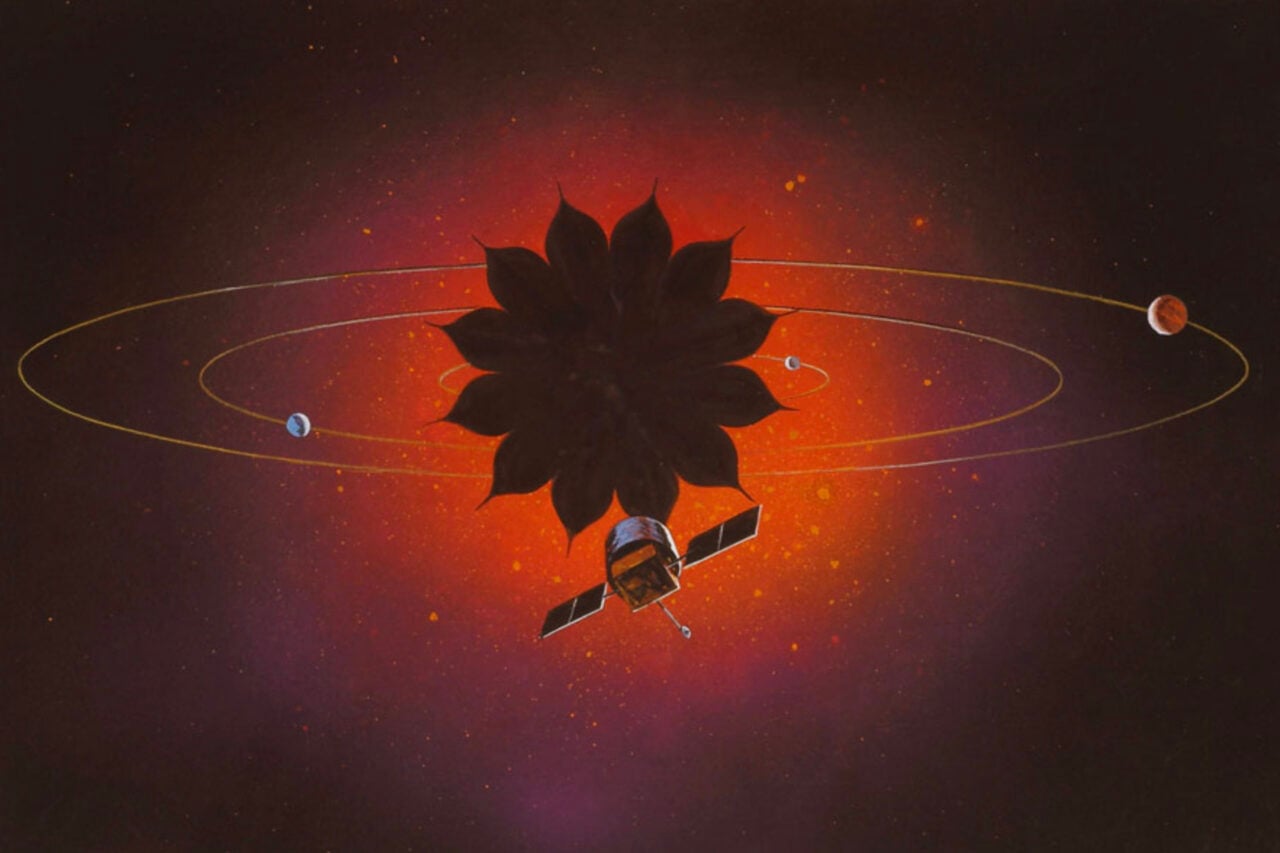
01 Gizmodo If you’ve ever blocked out the Sun with your hand to get a better look at anything, then you’re going to love NASA’s upcoming plan to hunt for habitable worlds.
-
02 Engadget The infrared telescope is already encapsulated inside a SpaceX Falcon Heavy fairing at NASA's Kennedy Space Center in Florida. It will fly on top of a Falcon Heavy rocket from Launch Complex 39A. If the launch doesn't go through on August 30, NASA and SpaceX will try again on August 31 at 7:22 AM Eastern time. You can watch the rocket launch live on NASA's website or on SpaceX's X account. In addition to the launch itself, NASA will also broadcast a mission science briefing on August 29 at 9AM ET with the Roman telescope team, followed by a prelaunch news conference.
-
03 TechCrunch President Donald Trump bought as much as $50,000 worth of SpaceX shares on June 23, according to a financial disclosure first reported by Reuters, two weeks after the record-setting IPO of Elon Musk’s company.
-
04 Ars Technica Donald Trump is presiding over an unexpected clean energy boom, as rising electricity demand spurs investment in new capacity despite the US administration’s efforts to thwart a solar and wind rollout.
-
05 Wired The amount of gas-fired power in development for data centers in the US has nearly doubled in less than a year, new research released Tuesday shows. The findings illustrate just how heavily tech companies are relying on building private fossil fuel plants to power data centers—and how fast artificial intelligence’s energy demand has grown.
-
06 CNET The universe is full of cool and interesting things, like black hole stars and nightmare planets that get scorched by their host star. Now researchers have found a star that moves ridiculously fast, and it’s right in our celestial backyard, whipping around the Milky Way’s supermassive black hole.
Fact Corroboration
Which sources independently confirm the same facts. Hover a claim to see its sources, or a source to see what it corroborates.
Coverage by Perspective
Source Similarity
Connections show how similarly each outlet covered this story. Thicker lines = more similar framing.
Sources (6)
- cnet
- techcrunch
- gizmodo
- wired
- arstechnica
- engadget