Police Technology Controversy: Flock's New Software Allows Searching for People via Camera
-
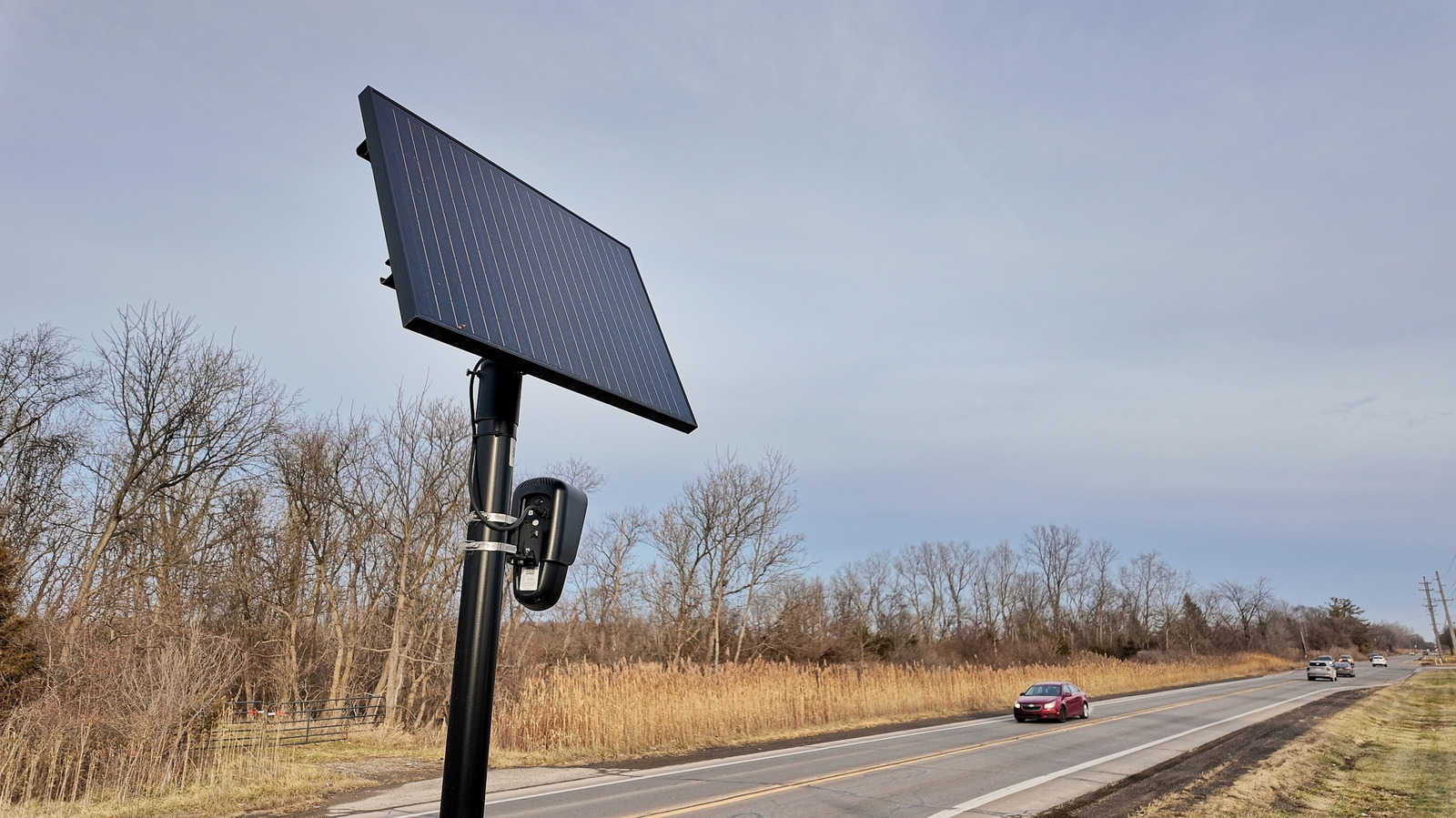
Amid mounting controversy over how police use and abuse its cameras, Flock's long-held position has been that its technology records plates and not the drivers behind them. Its own public trust pages tell customers that its technology is built for specific, case-based investigations and “not for watching people.” Experts who reviewed the AI tool for WIRED say those assurances are hard to square with what they found in the code.
Compare 3 other versions
GizmodoFlock has come under fire following a string of revelations of officers abusing its technology. Earlier this month, the Washington Post reported that at least fifty officers have been charged with or accused of misusing Flock cameras, in many of those cases to stalk women. The company said last week it would introduce new safeguards for its cameras in response to public backlash—which has manifested in widespread vandalism of its cameras—including a new tool that flags suspicious user behavior, which law enforcement customers will reportedly be required to adopt by the end of this year.
MIT Technology ReviewFlock, the police-tech giant known for its network of some 120,000 automatic license plate readers around the US, announced some changes to its platform last Thursday. The updates are meant to prevent officers from using the platform for illegal or illegitimate purposes.
EngadgetThis gets to one of the primary reasons people are so uncomfortable with Flock cameras. Police officers abuse them. There have been numerous reports that allege that cops have used the technology to cameras to spy on people and stalk ex-partners. This forced the company to introduce a number of safeguards to prevent abuse, like the ability to lock out flagged users and a requirement to attach case codes to searches. We have no idea what kind of safeguards would be needed to prevent abuse with the beta software that Wired took a look at.
-
Wired says the tool can "search for people in an area drawn on a map based on nothing more than a physical description." In other words, an officer doesn't even need a plate, name or a crime to begin searching. They just have to provide a location, a time and a pattern of behavior. The algorithm does the rest.
Compare 1 other version
WiredDrawing on a network of cameras that logs the movements of drivers in more than 6,000 communities, the tool can pick out potential witnesses by how often their cars pass through a neighborhood, or surface a driver’s “associates” from the cameras they pass together. Because the system also reaches police case files, 911 dispatch logs, and commercial identity records, those plates can be turned into names, home addresses, and relatives. It can search for people in an area drawn on a map based on nothing more than a physical description.
-
The interface showed that OS Investigate lets officers search for vehicles via Flock’s network of cameras using natural language prompts. The system comes with sixty-nine prewritten prompts, Wired reports, each of which officers can edit before clicking submit. One such prompt tells the system to find “witnesses based on vehicles most seen in [neighborhood] during [last 14 days] during [daily timeframe].” The investigation also found that while the system asks officers to provide a reason for making a particular search, it doesn’t appear to require typed reasons to be a certain length or include any particular details.
Compare 2 other versions
EngadgetTo that end, there's a chatbot component. OS Investigate lets officers input prompts to help with these broad searches. Wired has shared numerous examples of the prompts in a module you can scroll through. Some of the prompts come pre-loaded and say stuff like "find me witnesses based on vehicles most seen in [neighborhood] during [last 14 days] during [daily timeframe.]" The officers would fill in the banks and submit.
WiredOne prompt Flock pre-loaded into the system reads: “Find me witnesses based on vehicles most seen in [neighborhood] during [last 14 days] during [daily timeframe]. (will not include whitelisted vehicles).” An officer would fill in the blanks and submit it. The output is a list of plates, which other tools in the product then convert into names and home addresses.
-
"I don't know how else to say this, but this sounds completely insane," says Noel Pichardo, a former police officer who reviewed the software and related prompts for Wired. "I don't know how anyone can argue against the idea that Flock literally tracks people."
Compare 1 other version
Wired“I don't know how else to say this, but this sounds completely insane,” says Noel Pichardo, who was briefed on Flock’s technology during a pilot program while serving as a Pawtucket, Rhode Island, police officer and who reviewed the prompts for WIRED. “I don't know how anyone can argue against the idea that Flock literally tracks people.”
-
A current police officer who remains anonymous said that the witness-finding aspect makes him "slightly uncomfortable" but added that "as law enforcement, we need to use every tool available, in spite of what the 'defund' people say." The independent security researcher Buchodi took a more tactful approach, noting that "there are a lot of innocent activities that could be flagged, even if it also might be quite useful for investigators."
Compare 1 other version
WiredThe detective said the witness-finding prompts made him slightly uncomfortable, but added, “As law enforcement, we need to use every tool available, in spite of what the ‘defund’ people say.”
-
Faith Abubey reports. #news #flock... pic.twitter.com/JUimuW3OBi Chad Marlow, an attorney with the ACLU, says that the danger lies in the idea that officers could basically go fishing for crimes. "The difference between a police officer saying, 'Do you see any criminal patterns' or 'Find me criminal patterns' is going to produce two different things," he notes. "And I think the fact that they don't seem to have any limitations on the prompts enables the police to almost lead the AI in what it does."
Compare 1 other version
WiredChad Marlow, an attorney who runs the ACLU's “Get The Flock Out” campaign, says that is where the danger lies. “The difference between a police officer saying, ‘Do you see any criminal patterns’ or ‘Find me criminal patterns’ is going to produce two different things,” he says. “And I think the fact that they don't seem to have any limitations on the prompts enables the police to almost lead the AI in what it does.”
-
In a statement to WIRED, a spokesperson for Anthropic said: "We're adding marking to Claude's output to comply with the EU AI Act, and other labs are taking similar steps. It’s hard to identify AI-generated text, and this gives people better tools for identification. Text from supported Claude models, including output from Claude Code, will carry an invisible watermark, and it doesn't change the meaning, quality, or readability of Claude's responses. We also plan to ship a text-detection API so users can do more of this themselves.”
Compare 1 other version
GizmodoEarlier this month, Anthropic started placing an imperceptible label on all text produced using its Claude AI model to serve as an indicator that the material was generated with AI. The folks who don’t want it outed that they are using AI for work are now spending their hours looking for a way to scrub their outputs of that marker.
-
“I'm not against transparency, and I'm all for content attribution,” says Meyer. “I just think watermarking in itself is a really bad solution, because it has major drawbacks and risks.” He is concerned about the risk of false positives and that the watermarking might not distinguish between light or heavy AI use, especially since, as a native French speaker, he often uses Claude and other AI tools like Grammarly to edit his writing. Using the watermark as evidence–when even Anthropic admits it can only generate a probability that the text has been touched by Claude–could lead to employers unfairly rejecting candidates or overblown accusations of researchers using artificial intelligence just because the detector flags it, he says.
Compare 1 other version
GizmodoLikewise, there is concern that by slapping this marker on content, Anthropic and other companies that institute a similar watermark may be laying the groundwork for claiming ownership over certain material. Anthropic seems to have thought about that, and mentioned in a blog post that “A watermark only helps test whether Claude might have produced or processed the content. It doesn’t say anything about ownership or authorship and doesn’t change a user’s rights under our terms.” Of course, that’s only true until it isn’t. A blog post isn’t binding.
-
A Flock spokesperson described Investigate OS as “a separate product from Flock’s license-plate reader technology, designed to help investigators work across information their agencies already have access to,” according to a summary of the statement by Wired. The spokesperson also reportedly said that the tool’s capabilities and interface may change before it’s generally released to the public.
Compare 1 other version
WiredFlock did not respond to a list of questions about the product and did not dispute the capabilities described in our reporting. Instead, in a statement, spokesperson Paris Lewbel characterized OS Investigate as a separate product from Flock’s license-plate reader technology, designed to help investigators work across information their agencies already have access to. He said the tool’s capabilities and workflows may change significantly before a broader release.
-
Consider, for example, its new requirement that officers enter a case number before running a search on Flock’s platform. This is meant to ensure that searches have a legitimate purpose. But Flock confirmed to MIT Technology Review that it doesn’t verify those case numbers, so an officer can simply enter a bogus one. One could imagine a system that instead requires case numbers that match the police department’s records—a more intrusive integration, perhaps, but also a far stronger safeguard and one that leaves a more useful audit trail.
Compare 1 other version
WiredBefore an officer runs a search, the software can ask for a justification. The code shows that by default an officer has to type a reason for the search; however, the form appears to place no requirements on what that reason says or how long it must be. If a department also requires a case number, the form checks only that it contains at least three characters. WIRED could not determine whether Flock applies additional checks on its servers after the information is submitted.
5 details only one outlet reported
Independent claims that didn't surface elsewhere in our corpus. Treat as supplementary — not corroborated across outlets.
-
01 Engadget The software was reportedly called Nightshift and is now going by the name OS Investigate. It draws from a network of cameras in 6,000 communities and logs the movements of drivers in those communities, Wired reports. This could be used, for instance, to find a witness to a crime by analyzing vehicle movements near where a crime occurred. Then, that information could be cross-referenced with police case files, 911 dispatch logs and commercial identity records to find the name, home address, relatives and even friends of the potential witness.
-
02 Gizmodo As Business Insider notes, the term “AI watermark remover” has started trending on Google, jumping 60% in search interest week over week, and an open-source GitHub project called Watermarks Remover has amassed more than 15,000 “stars” and thousands of forks with the promise to scrub any output of indicators that it came from AI. Sabrina Ramonov, an AI educator, created her own web-based tool for washing text of residual model markers.
-
03 MIT Technology Review Or what about finding people who have been kidnapped or have gone missing, the use case that Flock cites more than any other? Efforts to solve these crimes would hugely benefit from Flock’s nationwide network of cameras. But if Americans want officers to tap into that network only for this purpose, we could design it that way: Searches tied to an active Amber Alert, or a similar emergency, could perhaps access larger amounts of data from surrounding cities. That would preserve the network’s value in emergencies without requiring people to accept mass surveillance.
-
04 Ars Technica When someone uploads a photo to the people-search tool ClarityCheck, the website has a clear message: “Your reverse image search is private and secure.” New research, though, shows that the website left more than 9 million image files, including photographs of people’s faces, publicly exposed. And a second misconfiguration publicly exposed people’s email addresses and phone numbers.
-
05 Wired His code to remove watermarks from Claude-generated text has since gone viral on GitHub, has been bookmarked more than 20,000 times on X, and has drawn more than 100 contributors, with many more incorporating the technology into their own projects. “Anthropic is embedding watermarks in its Claude texts … the issue is practically history just one day later,” wrote one AI specialist, accompanied by an image of Meyer breaking out of chains and standing on crumpled EU and Anthropic flags.
Fact Corroboration
Which sources independently confirm the same facts. Hover a claim to see its sources, or a source to see what it corroborates.
Coverage by Perspective
Source Similarity
Connections show how similarly each outlet covered this story. Thicker lines = more similar framing.
Sources (5)
- gizmodo
- mittech
- wired
- arstechnica
- engadget