FDA Gives Expedited Approval for Daraxonrasib Pill in Pancreatic Cancer Treatment
-
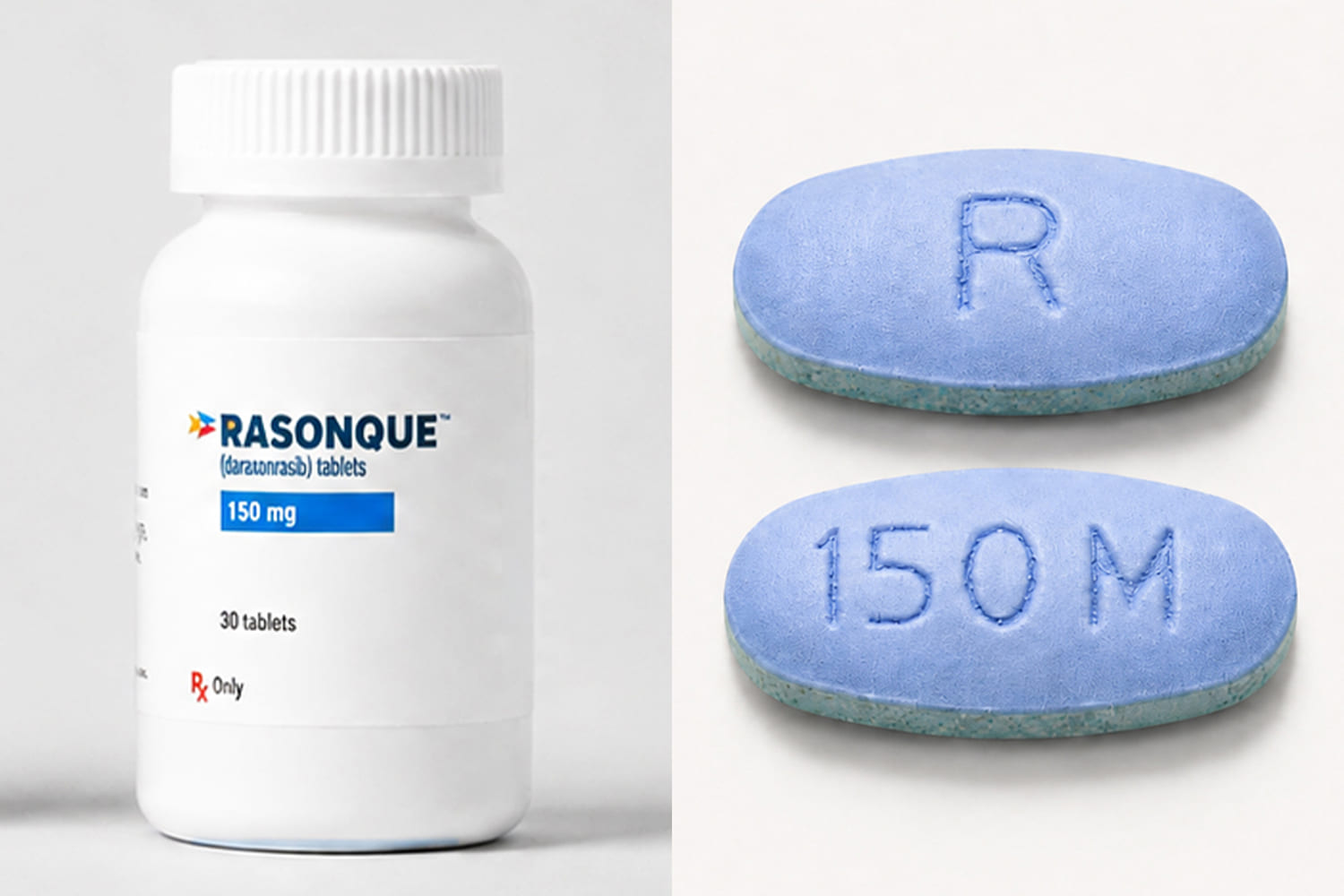
FDA officials gave expedited approval to the first-of-a-kind pill, called daraxonrasib, that blocks a mutated protein that fuels tumor growth in more than 90% of pancreatic cancer cases. It’s an approach that previously eluded drugmakers for decades.
Compare 8 other versions
The Guardian USFDA officials gave expedited approval to the first-of-a-kind pill, called daraxonrasib, that blocks a mutated protein that fuels tumor growth in more than 90% of pancreatic cancer cases. It’s an approach that has eluded drugmakers for decades.
Washington TimesFDA officials gave expedited approval to the first-of-a-kind pill, called daraxonrasib, which blocks a mutated protein that fuels tumor growth in more than 90% of pancreatic cancer cases. It’s an approach that previously eluded drugmakers for decades.
The HillFDA approves groundbreaking new pancreatic cancer drug The Food and Drug Administration (FDA) on Wednesday approved a treatment for advanced pancreatic cancer, offering new life-extending care for patients with one of the most aggressive forms of cancer. The once-daily pill, called daraxonrasib and manufactured by Revolution Medicines, will be sold under the brand name Rasonque. It was approved for patients who already tried…
NBC NewsThe Food and Drug Administration on Wednesday approved a groundbreaking pancreatic cancer drug that experts predict will transform treatment for the notoriously deadly disease.
The Daily WireThe U.S. Food and Drug Administration (FDA) on Wednesday approved a groundbreaking new treatment for advanced pancreatic cancer that nearly doubled median survival in a clinical trial, marking what experts are calling one of the biggest advances against the deadly disease in decades.
Washington PostFDA approves ‘landmark’ pancreatic cancer drug that extends patients’ lives In trials, Revolution Medicines’ daraxonrasib nearly doubled average survival times for one of the deadliest cancers.
New York TimesF.D.A. Approves the Drug Daraxonrasib That’s Poised to Transform Pancreatic Cancer In a key clinical trial, patients who got the pill, daraxonrasib, lived twice as long as those who got chemotherapy.
BBC NewsPublished The US Food and Drug Administration has approved a treatment for pancreatic cancer that, in clinical trials, nearly doubled the overall survival time for patients.
-
Patients taking the drug nearly doubled their survival time, with fewer severe side effects, in a study that randomly assigned them to receive the experimental treatment or more chemotherapy. The company-funded study enrolled 500 patients whose metastatic, or spreading, cancer had quit responding to prior treatment.
Compare 4 other versions
Associated PressPatients taking the drug nearly doubled their survival time, with fewer severe side effects, in a study that randomly assigned them to receive the experimental treatment or more chemotherapy. The company-funded study enrolled 500 patients whose metastatic, or spreading, cancer had quit responding to prior treatment.
The Guardian USPatients taking the drug nearly doubled their survival time, with fewer severe side effects, in a study that randomly assigned them to receive the experimental treatment or more chemotherapy. The company-funded study enrolled 500 patients whose metastatic, or spreading, cancer had stopped responding to prior treatment.
NBC NewsIn a late-stage clinical trial of 500 patients, people who got the drug along with standard chemotherapy lived about twice as long — 13.2 months, on average — compared with people who got chemotherapy alone.
BBC NewsA late-stage clinical trial with 500 patients found those who took the daily pill had an average survival time of 13.2 months, compared to 6.6 months for those on chemotherapy.
-
Rachna Shroff, a pancreatic cancer specialist at the University of Arizona Cancer Center, described an emotional reaction to the trial results earlier this year.
Compare 1 other version
NBC NewsDr. Rachna Shroff, chief of the division of hematology and oncology at the University of Arizona Cancer Center in Tucson, previously told NBC News that she “started crying tears of joy” when she saw the trial’s preliminary findings in April.
-
Pancreatic cancer is among the most deadly forms in large part because it is hard to detect before it starts spreading to other organs. The American Cancer Society estimates about 67,000 new cases will be diagnosed in the United States this year and more than 52,000 people will die from the disease. The five-year overall survival rate is 13%.
Compare 5 other versions
Washington TimesPancreatic cancer is among the most deadly forms in large part because it is hard to detect before it starts spreading to other organs. The American Cancer Society estimates about 67,000 new cases will be diagnosed in the United States this year and more than 52,000 people will die from the disease. The five-year overall survival rate is 13%.
Associated PressPancreatic cancer is among the most deadly forms in large part because it is hard to detect before it starts spreading to other organs. The American Cancer Society estimates about 67,000 new cases will be diagnosed in the United States this year and more than 52,000 people will die from the disease. The five-year overall survival rate is 13%.
BBC NewsEach year, roughly 67,000 people in the US are diagnosed with pancreatic cancer, which has the highest mortality rate of all major cancers, according to the American Cancer Society..
The Daily WireThe National Cancer Institute estimates that 67,530 Americans will be diagnosed with pancreatic cancer in 2026, while 52,740 are expected to die from the disease. The overall five-year relative survival rate is just 13.3%.
NBC NewsMore than 67,000 people in the U.S. are expected to be diagnosed with pancreatic cancer this year, according to the American Cancer Society.
-
The drug garnered public attention earlier this year when former Sen. Ben Sasse, R-Neb., described on CBS’ “60 Minutes” how he has had less pain while taking it. A surge in public interest led the FDA to allow “expanded access,” before the drug’s official approval, for patients who met certain criteria.
Compare 2 other versions
Washington TimesThe drug garnered public attention earlier this year when former Sen. Ben Sasse, R-Neb., described on CBS’ “60 Minutes” how he has had less pain while taking it. A surge in public interest led the FDA to allow “expanded access,” before the drug’s official approval, for patients who met certain criteria.
The Guardian USThe drug garnered public attention earlier this year when former US senator Ben Sasse of Nebraska described on CBS’s 60 Minutes program how he has had less pain while taking it. A surge in public interest led the FDA to allow “expanded access”, before the drug’s official approval, for patients who met certain criteria.
-
Revolution Medicines’ drug uses what’s essentially a molecular glue to bind with multiple KRAS subtypes. The Redwood City, California-based drugmaker is studying its technology for several other forms of cancer, including lung cancer.
Compare 2 other versions
Washington TimesRevolution Medicines’ drug uses what’s essentially a molecular glue to bind with multiple KRAS subtypes. The Redwood City, California-based drugmaker is studying its technology for several other forms of cancer, including lung cancer.
The Guardian USRevolution Medicines’ drug uses what’s essentially a molecular glue to bind with multiple Kras subtypes. The drugmaker, based in Redwood City, California, is studying its technology with other forms of cancer, including lung cancer.
6 details only one outlet reported
Independent claims that didn't surface elsewhere in our corpus. Treat as supplementary — not corroborated across outlets.
-
01 NBC News “It’s that big of a game changer for those of us who treat pancreatic cancer,” Shroff said. “It’s unprecedented.”
-
02 The Guardian US FDA regulators noted on Wednesday that they approved the drug more than six months ahead of their target date.
-
03 Associated Press FDA regulators noted on Wednesday that they approved the drug more than six months ahead of their target date.
-
04 Washington Times FDA regulators noted on Wednesday that they approved the drug more than six months ahead of their target date.
-
05 BBC News In 2025, the FDA granted the drug a "Breakthrough Therapy" designation, given to treatments for serious conditions that warrant an expedited review.
-
06 The Daily Wire The drug also significantly delayed disease progression. Patients taking Rasonque went about twice as long without their cancer getting worse compared with those receiving standard chemotherapy. The risk of death was reduced by 60% in the trial.
Fact Corroboration
Which sources independently confirm the same facts. Hover a claim to see its sources, or a source to see what it corroborates.
Coverage by Perspective
Source Similarity
Connections show how similarly each outlet covered this story. Thicker lines = more similar framing.
Sources (9)
- nyt
- ap
- dailywire
- thehill
- nbc
- guardian
- wapo
- bbc
- washtimes