Iran Escalates Cyber and Kinetic Threats Against U.S. Tech Infrastructure in the Middle East

Broke: Updated:
Iran Escalates Cyber and Kinetic Threats Against U.S. Tech Infrastructure in the Middle East
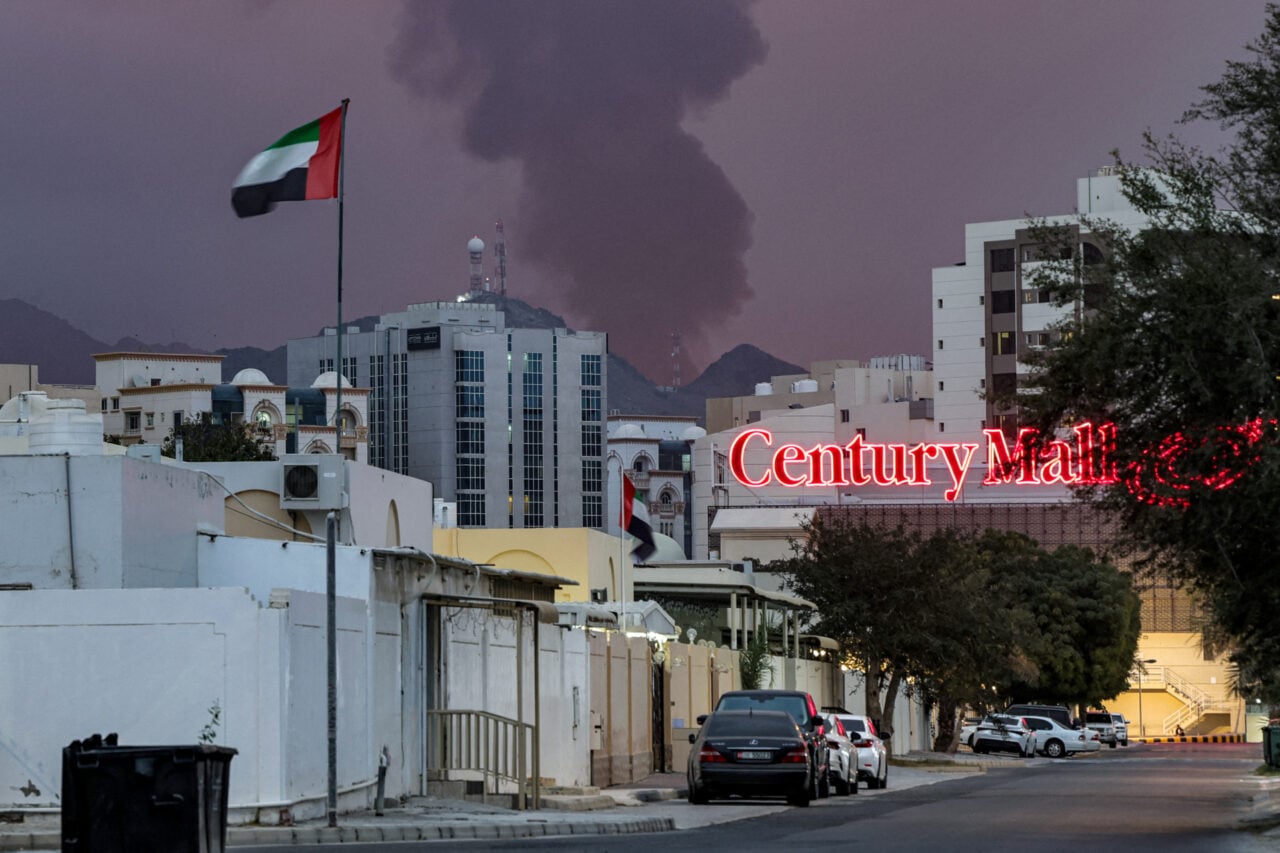
Photo: Gizmodo

The Islamic Revolutionary Guard Corps (IRGC) has issued explicit threats to target U.S. technology companies and their critical infrastructure across the Middle East, marking a significant escalation in regional tensions. The warnings, published on April 3rd via state-backed outlets, specifically name the planned 'Stargate' AI data center in Abu Dhabi as a potential target if the United States proceeds with strikes against Iranian power plants. The IRGC video, which has been widely disseminated on social media platforms like X, frames the data center as a legitimate military objective in retaliation for U.S. and Israeli actions.

The scope of the threat extends beyond a single facility. According to reports from CBS News and Engadget, the IRGC has instructed employees of 18 major U.S. technology firms—including Apple, Google, Meta, NVIDIA, Microsoft, Oracle, Tesla, HP, Intel, Palantir, Boeing, Dell, and Cisco—to evacuate their workplaces immediately. The directive also calls for the immediate evacuation of residents living in proximity to these corporate facilities within the region. This broad targeting list suggests a strategic intent to disrupt the operational continuity of American tech giants rather than focusing solely on specific assets.

From an enterprise and cybersecurity perspective, the threat environment has shifted from potential to active. A joint advisory issued by the FBI, NSA, and CISA warns that Iranian hackers have 'escalated' their tactics in response to the ongoing conflict. Ars Technica reports that Tehran is utilizing a dual approach: cyber operations designed to extract intelligence and stoke fear, coupled with the threat of kinetic missile strikes. TechCrunch notes that these cyber attacks are specifically aimed at American critical infrastructure, indicating a coordinated effort to degrade U.S. capabilities in the region.

The cultural and geopolitical implications of these threats are being analyzed through multiple lenses. Wired highlights the broader risks associated with potential U.S. strikes on Iran's nuclear sites, noting that the danger extends beyond immediate explosions to the potential failure of critical safety systems, which could have cascading effects across the Gulf. Meanwhile, Gizmodo and other outlets report that some threats may already be materializing; reports indicate that Amazon facilities in Bahrain were struck, and Oracle facilities in the UAE have been targeted following Iran's April 1st deadline. These incidents, if confirmed, would represent the first physical attacks on U.S. tech infrastructure in the region.

The 'Stargate' project, a joint venture between OpenAI and SoftBank to build massive AI data centers in the UAE, has become a focal point of this conflict. The IRGC's specific targeting of Stargate underscores the intersection of artificial intelligence development and national security. While consumer-facing reports focus on the safety of employees and the disruption of services, enterprise analysts are concerned with the resilience of cloud infrastructure and data sovereignty. The situation presents a complex challenge for U.S. policymakers, balancing the need to protect domestic and allied interests with the risk of further regional destabilization.

As diplomatic channels remain strained, the tech sector faces an unprecedented security environment. The convergence of cyber warfare and physical threats against data centers, which serve as the backbone of modern AI and cloud computing, signals a new phase in the conflict. Industry leaders are now tasked with assessing risk across their global footprints, while government agencies coordinate defensive measures to protect critical infrastructure from both digital and physical assault.

Coverage Analysis

The coverage of the IRGC's threats against U.S. tech infrastructure reveals distinct editorial priorities across consumer, enterprise, and culture outlets. While all categories acknowledged the core threat, they diverged significantly in framing: consumer outlets focused on immediate user safety and brand impact; enterprise outlets prioritized operational continuity, cyber tactics, and infrastructure resilience; culture outlets contextualized the events within broader geopolitical risks and societal implications. Notably, no academic or research-focused outlets were present in the source list to provide a deep-dive engineering or theoretical analysis of AI data center vulnerabilities.

User safety, brand visibility, and immediate disruption to services.

Personal risk and corporate accountability. The narrative centers on the human element—employees being told to flee—and the specific names of beloved consumer brands (Apple, Google, Tesla).

Low. Technical details about the 'Stargate' project or cyber capabilities are mentioned only as context for why these specific targets were chosen.

The immediate danger to employees and the potential for service outages in the Middle East. The focus is on 'what this means for me' or 'my company's safety.'

Strategic business continuity planning, the mechanics of cyber warfare, and long-term geopolitical consequences.

Focused on the specific 'Stargate' AI data center, framing it as a high-profile tech story about OpenAI's expansion.

Emphasized the evacuation orders for 18 companies, listing major consumer-facing brands to resonate with a general audience.

Operational resilience, cyber threat vectors, and infrastructure security.

Strategic risk management. The story is framed as a shift from 'potential' to 'active' threat environments requiring immediate corporate and government response.

High. Mentions specific agencies (FBI, NSA, CISA), tactical shifts ('dual approach' of cyber and kinetic), and the nature of critical infrastructure.

Data sovereignty, cloud resilience, and the coordination between private sector CISOs and government defense agencies.

The cultural or societal impact of the conflict; less focus on individual employee safety compared to corporate asset protection.

Analyzed the 'escalation' of tactics and the specific targeting of critical infrastructure, framing it as a coordinated effort to degrade U.S. capabilities.

Provided technical context on Tehran's 'dual approach' of intelligence extraction and fear-stoking, appealing to a technically literate audience.

Geopolitical consequences, societal implications, and the 'human cost' of technological warfare.

The intersection of technology and existential risk. The narrative often questions the broader consequences of military action on civilian tech infrastructure.

Variable. While they report the facts, they often pivot to the 'what if' scenarios of systemic failure.

Cascading failures in safety systems, the moral implications of targeting AI hubs, and the materialization of threats (e.g., Amazon/Oracle strikes).

Detailed corporate strategy or specific cyber-technical methodologies.

Expanded the scope beyond the immediate threat to discuss the failure of critical safety systems if nuclear sites were hit, highlighting 'cascading effects across the Gulf.'

Focused on the confirmation of attacks (Amazon, Oracle), framing the story as a reality check on the threats and the vulnerability of tech assets in conflict zones.

None

The source material lacks academic or research-focused outlets. Consequently, there is no coverage analyzing the engineering vulnerabilities of AI data centers, the theoretical frameworks of hybrid warfare in cyberspace, or the long-term geopolitical stability models. This gap leaves a void in understanding the 'how' and 'why' from an engineering or strategic studies perspective.

Consumer outlets (The Verge, CNET) framed the story as a 'breaking news' event affecting specific brands and people. Enterprise outlets (TechCrunch, Ars Technica) framed it as a 'security incident' requiring strategic response. Culture outlets (Wired, Gizmodo) framed it as a 'societal crisis' with broader regional implications.

Enterprise outlets provided the highest technical depth regarding threat actors and agency responses. Consumer outlets used technical terms (AI data centers) as hooks for brand recognition rather than deep analysis. Culture outlets used technical concepts to illustrate broader risks (safety system failures).

The divergence aligns perfectly with audience expectations: consumers want to know if their devices are safe; enterprise readers need to know how to secure their infrastructure; culture readers want to understand the human and societal cost of tech-driven conflict.

The story illustrates a clear siloing of technology coverage. While the factual core (IRGC threats, specific targets) remained consistent, the 'truth' of the story was constructed differently for each audience. The consumer narrative is about brand safety, the enterprise narrative is about infrastructure resilience, and the culture narrative is about geopolitical stability. The absence of academic voices suggests a missed opportunity to contextualize these threats within broader engineering or strategic studies frameworks.

Coverage by Perspective

Consumer
4
Enterprise
3
Culture
6

Source Similarity

Connections show how similarly each outlet covered this story. Thicker lines = more similar framing.

Sources (7)

  • techcrunch
  • engadget
  • wired
  • gizmodo
  • verge
  • cnet
  • arstechnica

Original Articles (13)