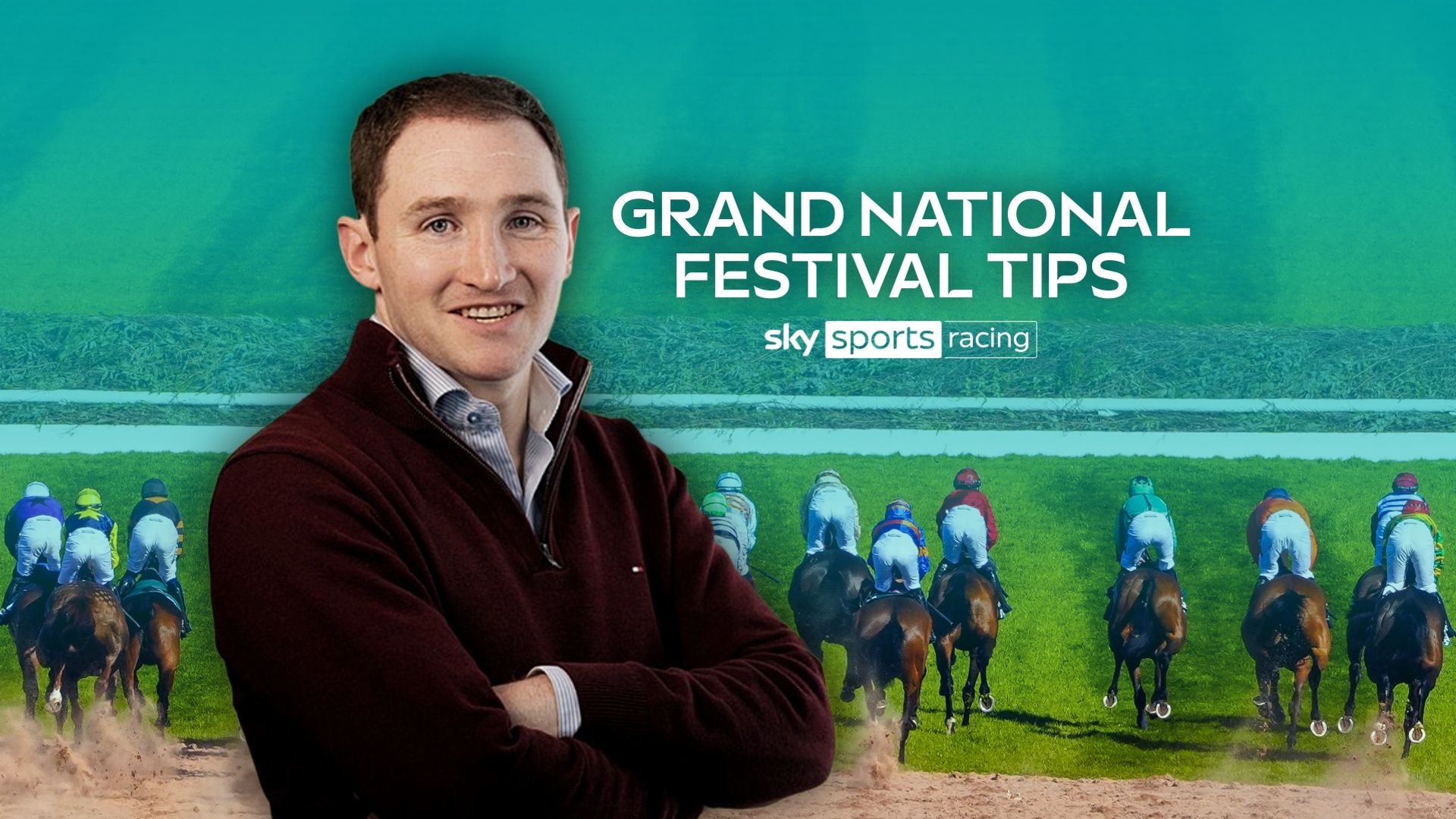
I Am Maximus Favored to Defend Grand National Title as Gordon Elliott Targets Record-Breaking Fifth

Broke: Updated:
I Am Maximus Favored to Defend Grand National Title as Gordon Elliott Targets Record-Breaking Fifth
Photo: Sky Sports

The stage is set at Aintree for the 2026 Randox Grand National, with defending champion I Am Maximus installed as the favorite to retain his title in one of horse racing's most storied events. The 2024 winner, carrying top weight, enters the race with a record of pressing Nick Rockett to the wire in last year's renewal before securing victory, and form guides suggest he has more to offer despite a quiet campaign prior to his breakthrough win.

While the focus remains on I Am Maximus, Irish trainer Gordon Elliott has positioned himself as a formidable challenger with five runners in the field. Elliott, who opened the Grand National meeting on Thursday with a Grade One double featuring Brighterdaysahead and another contender, is aiming for his fourth Grand National victory. A win would see him share the all-time record alongside Paul Nicholls and Martin Pipe. His highlight on opening day saw Brighterdaysahead defeat Dan Skelton's The New Lion by two-and-a-quarter lengths in the Aintree Hurdle, with jockey Jack Kennedy guiding the victory.

The narrative surrounding the 187-year-old race continues to highlight the potential for underdog success. Connor and Daniel King, a two-horse trainer operation, are hoping to keep the fairytale tradition alive with their entry, Oscars Brother. Connor King admitted that while the prospect of a historic victory is difficult to grasp from within the stable, an outsider's perspective suggests it could be one of the most remarkable tales in the race's history. The King stable represents a contrast to the established powerhouses, emphasizing the unpredictable nature of Aintree.

As the field of 34 runners prepares for Saturday's showpiece, analysis from across the United Kingdom highlights a blend of statistical scrutiny and expert intuition. Sky Sports Racing has released predictions from their team, with tipster Kevin Blake offering a 1-2-3-4 forecast and the Weekend Winners team selecting their top three contenders. Meanwhile, BBC Sport has published a comprehensive guide to the runners, examining form guides and data points that might influence the outcome. The broadcaster's analysis suggests that while historical statistics provide a framework, the unique demands of the Aintree course often defy pure data.

The Guardian Sport has provided a horse-by-horse breakdown of all 34 contenders, noting the weight assignments and recent performances. I Am Maximus's status as a previous winner at top weight is a significant factor, though the article notes his limited runs prior to 2024. The coverage also touches on the broader sporting context, with quizzes and previews linking the Grand National to other major events like the Six Nations and Masters golf tournament.

With the race day approaching, the consensus among UK media outlets is that while I Am Maximus holds the edge as the favorite, the depth of Elliott's challenge and the potential for a longshot victory from trainers like the Kings will define the weekend. The 2026 renewal promises to add another chapter to the Grand National's legacy, balancing statistical favorites with the enduring hope of a new fairytale.

Coverage Analysis

The provided source material indicates a near-exclusive focus on United Kingdom-based media outlets (Sky Sports, The Guardian Sport, BBC Sport). There is no evidence of coverage from major US, Australian, or European (non-UK) outlets in the source list. Consequently, a direct comparative analysis of regional differences is limited by the absence of international sources in this specific dataset. However, an analysis of the internal UK media landscape reveals distinct framing strategies based on outlet type and audience.

United States

Australia

Ireland (despite the trainer's nationality)

Rest of Europe

The absence of international coverage suggests the Grand National is treated as a hyper-localized British event in this specific reporting cycle. US outlets (e.g., ESPN, NBC Sports) typically cover the Grand National only if there is a significant American connection (e.g., an Irish trainer with US ties, or a major betting angle for the US market) or if it is framed as a 'global spectacle' rather than a domestic sporting fixture. The lack of Irish coverage in the source list is notable given Gordon Elliott's prominence, suggesting a potential gap where local Irish media might have focused more intensely on his record-chasing bid than the UK press.

Betting markets specific to non-UK jurisdictions (e.g., US odds)

International jockey profiles beyond the UK/Irish sphere

Global viewership statistics

National (UK)

Actionable betting advice and team consensus

The outlet frames the event through the lens of 'tips' and 'predictions.' The coverage is utilitarian, focusing on Kevin Blake's specific 1-2-3-4 forecast and the 'Weekend Winners' team selections. This appeals to a betting-focused audience, prioritizing immediate utility over narrative depth.

I Am Maximus (as the favorite to beat) and Gordon Elliott's runners are mentioned primarily as components of a betting strategy.

High emphasis on specific numerical predictions and 'best bets elsewhere' on the card, treating the Grand National as the headline of a larger racing day.

United Kingdom

National (UK) with a human-interest angle

Narrative, history, and the 'fairytale' element

The Guardian focuses heavily on the emotional and historical weight of the race. The headline regarding Connor and Daniel King ('Two-horse trainer hopes to keep Grand National fairytale tradition alive') highlights the underdog story. It also contextualizes the race within a broader cultural week (linking to Masters golf, Six Nations rugby), suggesting a general sports audience rather than just racing enthusiasts.

Gordon Elliott is framed as a challenger to the 'established powerhouses,' while the King stable is given significant prominence for their outsider status. I Am Maximus is acknowledged but secondary to the 'story' of the underdogs.

Unlike Sky Sports, The Guardian prioritizes the 'human interest' and 'tradition' angles over statistical predictions. It also integrates the race into a wider cultural calendar, making it relevant to non-racing fans.

United Kingdom

National (UK) with a data-driven approach

Statistical analysis and comprehensive guides

BBC Sport adopts an analytical, educational tone. Articles like 'Can these stats help you pick Grand National winner?' and the 'pinstickers' guide to runners' focus on form guides, data points, and historical context. This framing appeals to a broad public audience seeking authoritative information rather than betting tips.

The coverage is balanced, providing a 'horse-by-horse' breakdown for all 34 runners. It treats I Am Maximus's top weight status as a statistical hurdle rather than just a narrative point.

The BBC avoids the 'tipster' culture of Sky Sports and the emotional storytelling of The Guardian, opting for a neutral, data-centric approach that demystifies the race for the general public.

United Kingdom

The divergence in UK coverage stems from the distinct mandates of each outlet. Sky Sports is a commercial broadcaster reliant on betting partnerships, hence the focus on tips and odds. The Guardian, as a broadsheet newspaper, prioritizes narrative depth, human interest stories (the King stable), and cultural context. BBC Sport, as a public service broadcaster, focuses on impartiality, comprehensive information (the 'guide'), and statistical literacy. Without international sources, the analysis highlights how a single event is fragmented into 'betting,' 'story,' and 'data' within one nation, whereas international coverage (if present) would likely fragment it further into 'global spectacle' or 'niche sport' categories.

If US outlets had covered this, they likely would have omitted the detailed 'pinstickers' guide and betting tips (due to different gambling regulations) while potentially amplifying the 'fairytale' aspect of the King stable as a unique British cultural phenomenon. Australian coverage might have focused more on the Irish trainer Gordon Elliott's dominance, given Australia's strong connection to Irish racing talent.

Coverage by Region

UK
10

Source Similarity

Connections show how similarly each outlet covered this story. Thicker lines = more similar framing.

Sources (3)

  • guardian-sport
  • bbc-sport
  • skysports

Original Articles (10)