US Treasury Seeks to Lower Borrowing Costs Amid Rising Bond Yields
-
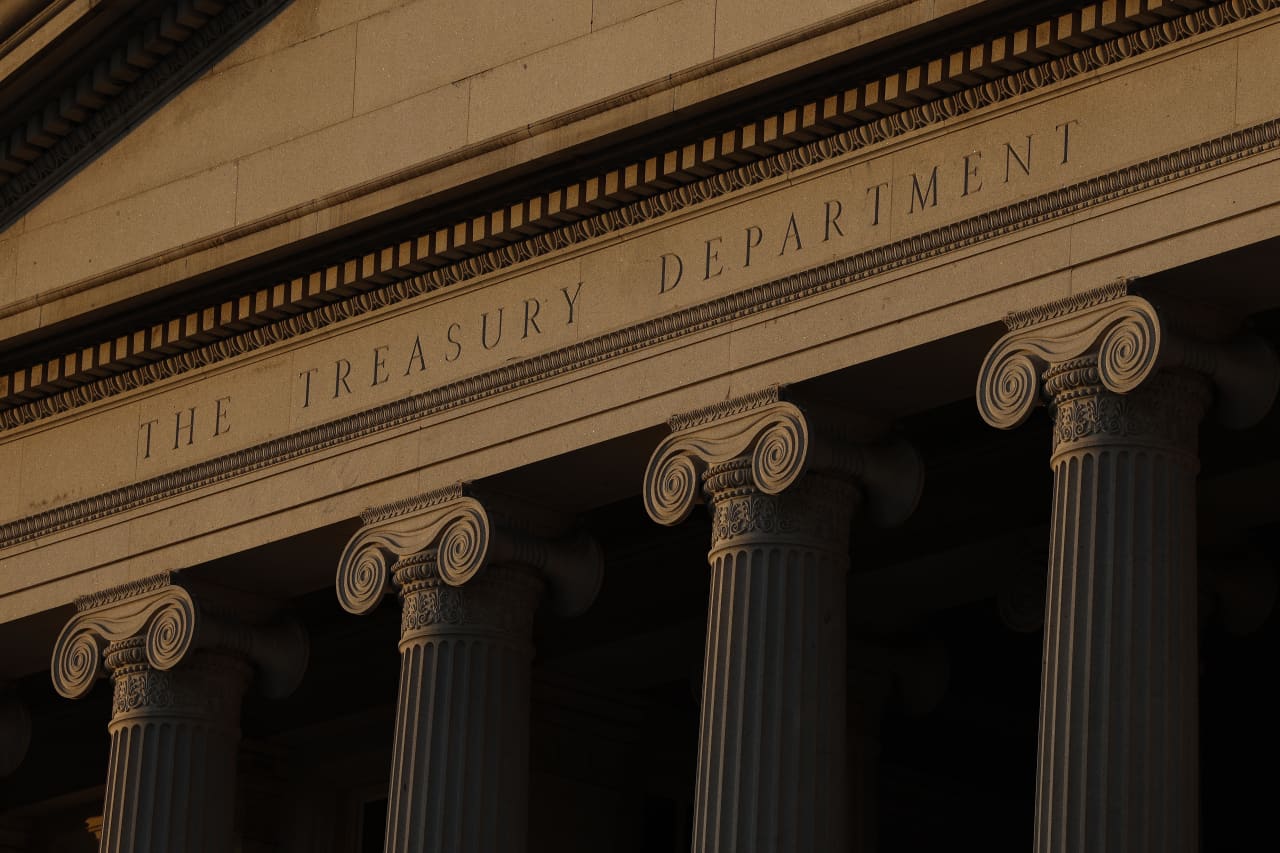
The Treasury Department on Wednesday said it will more than double the size of its government debt repurchases, sending yields sharply lower.
Compare 3 other versions
Epoch Times BusinessFrom Sept. 9, the Treasury will double the size of its government debt repurchases to $4 billion, focusing its buyback operations on 10- to 20-year and 20- to 30-year bonds.
MarketWatchThe effect of a debt buyback can be to push prices higher and yields lower The Treasury Department said Wednesday that it will more than double the size of government-debt buybacks, sending yields sharply lower and stocks higher at the market open.
Financial TimesUS Treasury to double buybacks of long-term government debt Sharp sell-off in recent weeks has sent borrowing costs soaring
-
Bessent Deploys Debt Buybacks in Sign of Concern Over Yield Rise US Treasury Secretary Scott Bessent made a fresh attempt to rein-in long-term borrowing costs from multi-year highs, sending Treasury yields and the dollar down. Ira Jersey, Chief US Interest Rates Strategist for Bloomberg Intelligence, discusses the move. (Source: Bloomberg)
-
According to the statement, "this increase in buyback operation sizes reflects Treasury’s desire to provide greater liquidity support in longer-dated nominal sectors where there is consistent strong sponsorship from market participants, as evidenced by the significant volume of high-quality offers Treasury routinely receives in longer-dated buyback operations."
Compare 3 other versions
CNBCThe change will start Sept. 9 and stay in effect through Nov. 4. "This increase in buyback operation sizes reflects Treasury's desire to provide greater liquidity support in longer-dated nominal sectors where there is consistent strong sponsorship from market participants, as evidenced by the significant volume of high-quality offers Treasury routinely receives in longer-dated buyback operations," the department said in a statement. This is breaking news. Please refresh for updates.
Epoch Times BusinessIncreasing buyback operation sizes indicate the Treasury’s commitment to offer more liquidity support amid consistent and robust demand from investors, “as evidenced by the significant volume of high-quality offers Treasury routinely receives in longer-dated buyback operations,” the department said in an Aug. 19 statement.
Washington Times BusinessBut Treasury yields fell in the morning after the U.S. Treasury Department said it will at least double the size of its planned purchases of longer-term Treasurys from Sept. 9 through Nov. 4. The department said it’s doing so “to provide greater liquidity support in longer-dated nominal sectors where there is consistent strong sponsorship from market participants.”
-
Rising oil prices are main driver behind this recent surge in bond yields, as investors fear inflation could spike again.
Compare 2 other versions
CNBCSovereign bond yields around the world are on the rise, with many on Wall Street pointing to rising oil prices and inflation fears as the culprits .
Epoch Times BusinessA broad array of factors has pushed up yields, including persistent war-driven inflation fears, fiscal worries, potential monetary policy tightening, and competition from artificial intelligence-related corporate bonds.
-
The 30-year Treasury yield, which has recently touched its highest level since 2007, fell more sharply to 5.19% from 5.28% late Tuesday.
Compare 4 other versions
CNBCThe longer-dated 30-year Treasury bond yield fell over 1 basis point to 5.272%, after notching a new 19-year high on Tuesday at over 5.33%.
Epoch Times BusinessOn Aug. 17, the 30-year Treasury yield topped 5.31 percent, the highest since June 2007.
FortuneThis dynamic is already visible in the Treasury market. The yield on the 10-year Treasury reached 4.6%, while the 30-year yield hit 5.2%. Those elevated yields reflect the concerns over inflation, fiscal sustainability and the sheer amount of government borrowing. For bond investors, rising yields are a double-edged sword.
RealClearMarketsThe US 30‑year Treasury yield rose sharply on Monday, breaking higher after spending the first half of August in a tight range. The move signals the bond market’s growing unease with several risk factors, including inflation and government debt. Read Full Article »
-
The yield on the 10-year U.S. Treasury note — the key benchmark for U.S. government borrowing — fell 2 basis points to 4.686%.
-
The moves were part of a wider sell-off in long-dated global bonds on Tuesday. Japan's 10-year bond yield reached its highest level in three decades. German 30-year bund yields hit their highest point since 2011, while rates on France's 30-year bond reached the highest going back to 2008.
Compare 1 other version
Epoch Times BusinessHungry for Yield Global bond yields have also come under pressure this year. Japan’s 10-year bond yield is at a three-decade high. Germany’s 30-year yield climbed to the highest level since 2011. France’s 30-year yield also reached an 18-year high.
-
When yields rise, the implications extend far beyond bond portfolios, especially due to Treasury rates helping setting the baseline cost of borrowing throughout the economy. The higher yields can translate into more expensive mortgages, corporate loans and consumer credit—potentially slowing investment, housing and spending.
Compare 2 other versions
Epoch Times BusinessFor businesses, rising yields would mean higher borrowing costs, which affect expansion and workforce hiring decisions. For the public, rising Treasury yields could mean paying higher rates on auto loans, mortgages, and other loans.
Washington Times BusinessThe stock market has been under growing strain as worries about inflation, big government debts and other factors drive Treasury yields higher in the bond market. That ultimately makes borrowing money more expensive for everyone, which slows the economy and undercuts prices for stocks and other investments.
-
Global bond sell-off deepens amid fears over inflation and AI issuance Long-term government borrowing costs hit multi-decade highs
Compare 1 other version
BBC BusinessPublished Long-term borrowing costs across some of the word's biggest economies hit fresh highs because of concerns over inflation, government debt levels and spending on Artificial Intelligence (AI).
-
Instead, longer-term yields are set by investors in the bond market, who are deciding how much interest they need to get paid by the U.S. government in exchange for lending it money. And recently, they have been demanding more in interest to make up for the growing risks of high inflation, continued government deficits and other factors.
Compare 2 other versions
Epoch Times BusinessGould attributed factors such as investors weighing inflation expectations, growing federal deficits, stronger-than-expected economic data, and the increased issuance of Treasurys to finance government spending as contributing to elevated long-term yields.
BBC BusinessBond investors typically demand higher returns - or yields - if inflation is high or they expect it to be elevated in the future.
9 details only one outlet reported
Independent claims that didn't surface elsewhere in our corpus. Treat as supplementary — not corroborated across outlets.
-
01 MarketWatch Market Extra Treasury-market reprieve could be fleeting with deluge of corporate-bond issuance due in September
-
02 Bloomberg Stocks Climb as Treasury Steps In to Support Bonds Wall Street staged a rebound after the Treasury said it plans to boost buybacks of longer-dated bonds, a signal the US wants to lower borrowing costs after yields hit multi-decade highs. Lindsay Rosner, Head of Multi-Sector Investing at Goldman Sachs Asset Management, discusses her views on market resilience and global risk premiums. (Source: Bloomberg)
-
03 ZeroHedge After today's stunning announcement by the Treasury it was doubling the size of long-end buyback operations to boost liquidity in the space, many were closely watching today's 20Y auction - which is viewed as the proximal catalyst to trigger Bessent's panic as it was going to price at the highest yield in the history of the 20Y auction - to see how much demand there was for this key paper. As it turns out: not a whole lot.
-
04 CNBC Yields fell sharply following Wednesday's announcement, while stocks rose . "It's a put. It's an obvious put," Cramer said, using an options term for a contract designed to protect an investor from downside risk. Cramer and others in the past have referred to the Trump administration's tendency toward market-friendly policies as a "Trump put." In Wednesday's announcement, the Treasury said it will target securities in the 10- to 20-year and 20- to 30-year portions of the bond market, where demand has weakened. The program does not reduce the government's overall debt load, but is designed to improve liquidity by buying back existing securities.
-
05 Fortune The bond market is the only major asset class currently pricing risk correctly, according to Johns Hopkins economist Steve Hanke—and what it’s pricing in is ugly. In an interview with Fortune, Hanke argued that President Trump has inadvertently mixed what he called “a deadly cocktail” for Treasuries, and the result is a bond selloff that has already pushed yields past the informal threshold Treasury Secretary Scott Bessent has been trying to defend.
-
06 Washington Times Business NEW YORK — U.S. stocks are ticking higher Wednesday after the U.S. Treasury Department said it will buy more U.S. government bonds in a move that eased pressure on financial markets worldwide. Strong profit reports for the spring from Estee Lauder, Target and other U.S. companies are also helping to support the stock market.
-
07 Epoch Times Business Yields on long-term U.S. bonds fell midweek after the Treasury Department said it would expand long-end debt buybacks amid climbing rates.
-
08 BBC Business The interest rate on US borrowing over 30 years hit 5.33% on Tuesday, the highest since June 2007, meanwhile UK long-term debt reached 5.85%. There were similar moves in Germany and Japan.
-
09 RealClearMarkets Long rates are up again, nearing the high end of their recent range, spurring warnings of a bond bonfire globally. The alleged culprit: Reheating inflation tied to oil prices, which is prompting markets to price in central bank rate hikes across the developed world. It sounds simple and logical when you pair it with market-based indicators registering higher likelihoods of rate hikes. But we don’t think it holds up. Not only is there scant evidence resurgent inflation is at hand, but bonds’ fitness for a long-term portfolio doesn’t depend on central bankers’ whims. Read Full Article »
Fact Corroboration
Which sources independently confirm the same facts. Hover a claim to see its sources, or a source to see what it corroborates.
Coverage by Perspective
Source Similarity
Connections show how similarly each outlet covered this story. Thicker lines = more similar framing.
Sources (10)
- bbc-biz
- ft
- cnbc
- rcmarkets
- marketwatch
- epochtimes-biz
- zerohedge
- bloomberg
- fortune
- washtimes-biz