Susan Clancy's Defense Team Describes Psychotic Break Amid Trial
-
In the months prior to what Clancy’s defense team has described as a psychotic break, she had repeatedly sought psychiatric help. She was briefly hospitalized and had prescriptions for 13 medications to treat her intense anxiety, depression, racing thoughts, insomnia, and confusion. Her lawyers have argued that she was suffering from postpartum psychosis, a psychiatric condition that occurs after 0.1 to 0.2 percent of deliveries in women who don’t have a history of mental illness. At the time of their death, her children were eight months to 5 years old.
Compare 5 other versions
NPR NewsThe trial of a Boston-area mother charged with murdering her three small children in 2023 is leading to calls to improve postpartum mental health care. While the prosecution paints her as a deliberate killer, Lindsay Clancy's defense team argues she was in the grips of severe postpartum psychosis, and didn't receive proper medical care.
Associated PressClancy’s attorney Kevin Reddington does not dispute that she killed the children. But he says the jury should not hold her criminally responsible because she had postpartum psychosis, a rare mental illness linked to the stress, sleep deprivation and hormonal changes that follow childbirth. He said she also had bipolar disorder and that antidepressants prescribed after the birth of her third child worsened her condition.
Washington TimesClancy’s attorney Kevin Reddington does not dispute that she killed the children. But he says the jury should not hold her criminally responsible because she had postpartum psychosis, a rare mental illness linked to the stress, sleep deprivation and hormonal changes that follow childbirth. He said she also had bipolar disorder and that antidepressants prescribed after the birth of her third child worsened her condition.
The Guardian USNow, a mental health advocate and writer, Cliffel has been distressed in recent weeks by the sensationalized, wall-to-wall media coverage and conspiracy theories swirling around the trial of Clancy, whose lawyers will need to convince a jury it was her sickness, not her, that took the lives of her children. Clancy’s psychosis, her lawyers have argued, was exacerbated by the treatment she received at a local hospital, where she was prescribed an incorrect mix of over a dozen psychiatric medications.
New York PostYates killed her children in 2001. She was initially found guilty at a first trial, but the conviction was overturned, and she was found not guilty by reason of insanity at a second trial in 2006. This is a developing story. Please check back for updates.
-
Early in the trial, Clancy’s former husband, Patrick Clancy, described the horror of returning home to find his dead children. During his testimony, prosecutors played a harrowing 911 call he made after finding his wife outside in the backyard.
Compare 2 other versions
Washington TimesEarly in the trial, Clancy’s former husband, Patrick Clancy, described the horror of returning home to find his dead children. During his testimony, prosecutors played a harrowing 911 call he made after finding his wife outside in the backyard.
The Guardian USThough Clancy has admitted to the murders, these true-crime obsessives have zeroed in on a particular conspiracy theory: that Clancy’s ex-husband, Patrick Clancy, actually murdered their children, framing her for the crimes afterwards. The videos they post parse purported inconsistencies in Patrick’s testimony. That Patrick Clancy’s alibi seems rock solid – surveillance footage and phone records corroborate that he was at a CVS during the murders, picking up his then-wife’s medications – is of little concern. They have asserted, among other claims, that Patrick Clancy may have hired a body double to go to the CVS for him.
-
The prosecution rested its case Monday after three weeks of testimony. Clancy’s lawyer now gets his chance to call witnesses.
Compare 1 other version
Washington TimesThe prosecution rested its case Monday after three weeks of testimony. Clancy’s lawyer now gets his chance to call witnesses.
-
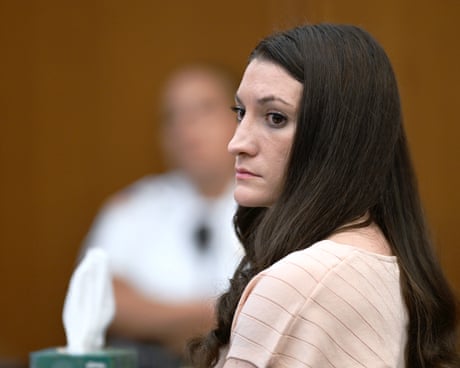
Clancy hasn’t testified in the trial and isn’t required to do so, but jurors have seen her break down in sobs at several points while others have been testifying, including when prosecutors showed the jury autopsy photos of the children.
Compare 1 other version
Washington TimesClancy hasn’t testified in the trial and isn’t required to do so, but jurors have seen her break down in sobs at several points while others have been testifying, including when prosecutors showed the jury autopsy photos of the children.
4 details only one outlet reported
Independent claims that didn't surface elsewhere in our corpus. Treat as supplementary — not corroborated across outlets.
-
01 The Guardian US Clancy’s live-streamed trial has become fodder for amateur sleuths, operating accounts on TikTok and other social media platforms, to push viral conspiracy theories that experts say threaten to undermine efforts to de-stigmatize and raise awareness of postpartum illnesses.
-
02 New York Post Lindsay Clancy’s former co-worker Margaret Hamp recounted for jurors Monday how Clancy cried when Hamp told her of the case of Andrea Yates, who drowned her five kids.
-
03 The Atlantic Christopher Slobogin, a professor of law and psychiatry at Vanderbilt Law School, told me that courts have applied different tests for establishing insanity over time, though none has overlapped fully with clinical descriptions of mental illness. In the Victorian era, courts seeking to determine whether a defendant could be excused from criminal liability by reason of insanity began relying on something called the M’Naghten rule, named for Daniel M’Naghten, a Scottish artisan whose paranoid delusions about a grand conspiracy moved him to shoot and kill a senior British civil servant in 1843. M’Naghten’s case inspired a rule that designated defendants legally insane if they did not understand the nature of their criminal acts or that their actions were wrong.
-
04 NPR News "We know that we don't train our doctors in it, that it's massively missed," says Dr. Veerle Bergink, a psychiatrist and director of the Women's Mental Health Center at Icahn School of Medicine at Mount Sinai. And patients often have difficulty finding appropriate care, she adds.
Fact Corroboration
Which sources independently confirm the same facts. Hover a claim to see its sources, or a source to see what it corroborates.
Coverage by Perspective
Source Similarity
Connections show how similarly each outlet covered this story. Thicker lines = more similar framing.
Sources (6)
- washtimes
- guardian
- nypost
- ap
- npr
- atlantic