Supreme Court Reverses Lower Court Order on Mail-In Voting Restrictions
-
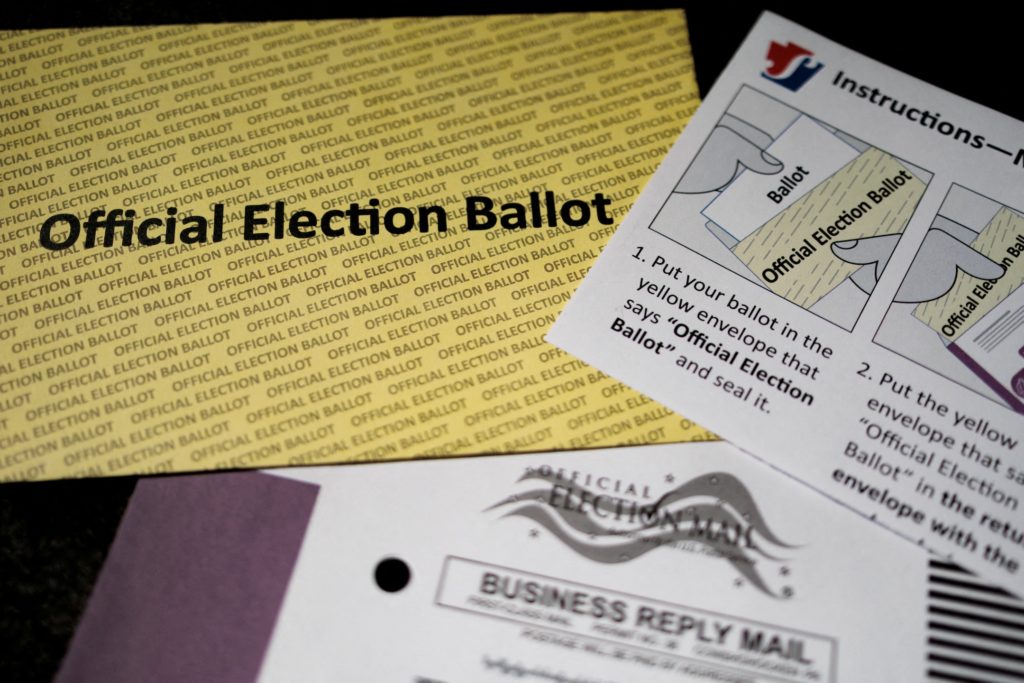
The Supreme Court on Monday lifted a lower court’s injunction on President Trump’s executive order seeking to limit mail-in voting ahead of November’s midterm elections. Trump’s order directs the Department of Homeland Security to create state-by-state lists of eligible voters who are citizens. The U.S. Postal Service would then use the lists provided by states to assess whether voters should be allowed to vote by mail. Justices ruled 6 to 3 that California and 22 other states lacked standing to sue over the issue. The ruling, however, did not address whether Trump had authority to impose the rules. A separate nationwide injunction against parts of the same order remains in place.
Compare 12 other versions
VoxSo Trump wants to impose impossible deadlines on many states. But Monday’s decision does not actually hold that it is legal for him to do so. Indeed, the federal judge who initially blocked Trump’s executive order has already signaled that she is likely to block the USPS’s new rule. We will find out if the Supreme Court will allow Trump to sabotage voting by mail after that new decision makes its way back to the justices.
HuffPostNational Democrats on Tuesday cited the rule in asking the federal judge in the Washington case to block Trump’s order after he declined to do so last spring, saying the administration at the time had not taken concrete action. In Boston, U.S. District Judge Indira Talwani also found that the administration moving forward with the mail ballot rule had violated a separate injunction she had placed on the Postal Service prohibiting it from enacting Trump’s order, although she did not take any action against the government.
Washington TimesThe court said Democratic-led states moved too soon in June when they got a federal judge in Boston to freeze Trump’s order. Justices said the challenge was premature, not that the policy itself is constitutional. A second court order still blocks the U.S. Postal Service from enforcing new mail-ballot rules nationwide, and the Trump administration is fighting to lift that hold too.
Washington ExaminerA federal judge said Tuesday that the U.S. Postal Service violated a nationwide injunction by issuing President Donald Trump‘s mail-ballot rule for the November election, but declined to impose additional relief that would prevent its scheduled publication Wednesday. Her ruling came one day after the Supreme Court found states had sued too early over Trump’s mail-ballot executive order and lifted an injunction in a separate lawsuit.
Associated PressThe Postal Service said it would not comment because of the pending lawsuit. National Democrats on Tuesday cited the rule in asking the federal judge in the Washington case to block Trump’s order after he declined to do so last spring, saying the administration at the time had not taken concrete action. In Boston, U.S. District Judge Indira Talwani also found that the administration moving forward with the mail ballot rule had violated a separate injunction she had placed on the Postal Service prohibiting it from enacting Trump’s order, although she did not take any action against the government.
USA TodayStates have renewed their legal challenge to the Trump administration's efforts to restrict voting by mail, bringing a lawsuit in Massachusetts against the U.S. Postal Service.
NPR NewsThe Supreme Court has paused a lower court's ruling that blocked key directives from President Trump's executive order to restrict mail-in voting for this fall's midterm election in about two dozen states and Washington, D.C.
PBS NewsHourNothing changes yet with the Supreme Court's order on mail voting. But it could open door to 'chaos' Rather than saying that President Donald Trump's order is legal, the high court said Monday it was too early for Democratic-run states to challenge it in June, when they convinced a federal judge in Boston to freeze the order for November's election.
Fox NewsCalifornia Gov. Gavin Newsom announced plans to sue the Trump administration over its push to restrict mail-in voting after the Supreme Court allowed the administration to enforce challenged provisions of President Donald Trump’s executive order for "election integrity" while litigation continues.
New York TimesTrump’s Efforts to Sow Election Doubts Get Boost from Initial Court Order A preliminary Supreme Court ruling could leave voters confused about casting ballots by mail, even as President Trump’s executive order is being litigated in the lower courts, experts said.
The FederalistThe U.S. Supreme Court agreed to pause a lower court blockade on President Trump’s mail-in voting executive order on Monday. The vote was 6-3, with Justices Sonia Sotomayor, Elena Kagan, and Ketanji Brown Jackson dissenting.
RealClearPoliticsThe Supreme Court just cleared a major hurdle for Trump's election integrity order in a 6-3 ruling. Here's what it means for the November midterms. Read Full Article ⟶
-
Trump’s executive order remains barred from taking effect under a separate injunction that the administration argues needs to be immediately rescinded in light of the high court’s ruling in the previous Democratic state lawsuit. It also had succeeded in a third case filed in May in the District of Columbia, convincing a judge that it was too early to prevent its implementation of the executive order.
Compare 2 other versions
Associated PressTrump’s executive order remains barred from taking effect under a separate injunction that the administration argues needs to be immediately rescinded in light of the high court’s ruling in the previous Democratic state lawsuit. It also had succeeded in a third case filed in May in the District of Columbia, convincing a judge that it was too early to prevent its implementation of the executive order.
VoxThe Supreme Court’s decision reinstates Trump’s order for now, but there are several active cases challenging this order in the lower courts. So it is likely that a judge will issue a new decision blocking the executive order again very soon.
-
The majority went on to note that its ruling on the administration’s application “does not mean that any measure taken by the Government to implement the Order will necessarily be lawful.” While “time will tell” on that point, the justices affirmed that “the Order itself does not harm the States, so the District Court lacked jurisdiction to bar the Government from trying to implement it.”
Compare 1 other version
HuffPost“The Court’s disposition of this application does not mean that any measure taken by the Government to implement the Order will necessarily be lawful. On that score, time will tell,” the majority wrote in an unsigned order.
-
The three liberal-leaning justices publicly dissented, with Justice Ketanji Brown Jackson writing that the rule “lets another shoe drop in the Kafkaesque nightmare that our precedents have been steadily creating for certain plaintiffs who seek to bring election-related challenges.”
Compare 1 other version
The FederalistMeanwhile, Jackson penned a solo dissent longer than the per curiam opinion and Sotomayor’s dissent combined. Across 23 pages, the junior justice contended that the Supreme Court’s granting of relief “violates well-established precedents concerning this Court’s equitable discretion and needlessly injects chaos and uncertainty into the upcoming midterm elections.”
10 details only one outlet reported
Independent claims that didn't surface elsewhere in our corpus. Treat as supplementary — not corroborated across outlets.
-
01 USA Today "This is not over," Maine Secretary of State Shenna Bellows told USA TODAY. "The states will see the Trump administration in court, and we will do everything in our power to protect the rights of American citizens to use the mail to vote, just as they always have."
-
02 Fox News SCOTUS stressed that its decision addressed the injunction rather than the ultimate legality of the order, leaving the door open to additional challenges.
-
03 Washington Examiner “Defendants cannot contend that they misunderstood the scope of the court’s order,” Talwani, an appointee of former President Barack Obama, wrote in her five-page ruling. “Accordingly, despite the Defendants’ protestations that ‘[t]he United States takes its obligation to comply with court orders very seriously,’ the court finds that Defendants violated the preliminary injunction in this case.”
-
04 HuffPost He issued his first election executive order just months after retaking office, attempting to require documentary proof of citizenship to vote, among other changes. He has also been pushing a sweeping election bill that has stalled in the Senate amid opposition from Democrats and even some within his own party.
-
05 Associated Press He issued his first election executive order just months after retaking office, attempting to require documentary proof of citizenship to vote, among other changes. He has also been pushing a sweeping election bill that has stalled in the Senate amid opposition from Democrats and even some within his own party.
-
06 The Federalist In its Monday ruling, the Supreme Court found that the Trump administration is likely to succeed on the merits of its arguments that Talwani lacked jurisdiction to issue a judgment on the matter. It also ruled that the government is likely to succeed on the merits of its claims that Talwani’s injunction “is causing it irreparable harm, and that the equities do not favor leaving the injunction in place while the [its] appeal is pending.”
-
07 NPR News But with the start of absentee voting for the midterms just weeks away, legal and practical hurdles loom over whether the U.S. Postal Service and other federal agencies can finish carrying out Trump's directives.
-
08 Washington Times Justice Ketanji Brown Jackson dissented, warning the ruling injects “chaos and uncertainty” into the midterms. Election officials in several states say there’s no realistic way to meet new envelope and voter-verification rules before ballots start going out, some within days.
-
09 Vox On Monday, the Supreme Court’s Republican majority allowed that order to go into effect. All three of the Court’s Democrats dissented.
-
10 Democracy Now “This leads to a lot of uncertainty going into the midterms, because the Trump executive order would radically restrict vote by mail,” says Ari Berman, the national voting rights correspondent for Mother Jones. If the ruling goes into effect, “it could disenfranchise millions of voters in
Fact Corroboration
Which sources independently confirm the same facts. Hover a claim to see its sources, or a source to see what it corroborates.
Coverage by Perspective
Source Similarity
Connections show how similarly each outlet covered this story. Thicker lines = more similar framing.
Sources (13)
- huffpost
- pbs
- nyt
- ap
- foxnews
- federalist
- npr
- democracynow
- usatoday
- rcp
- washexaminer
- vox
- washtimes