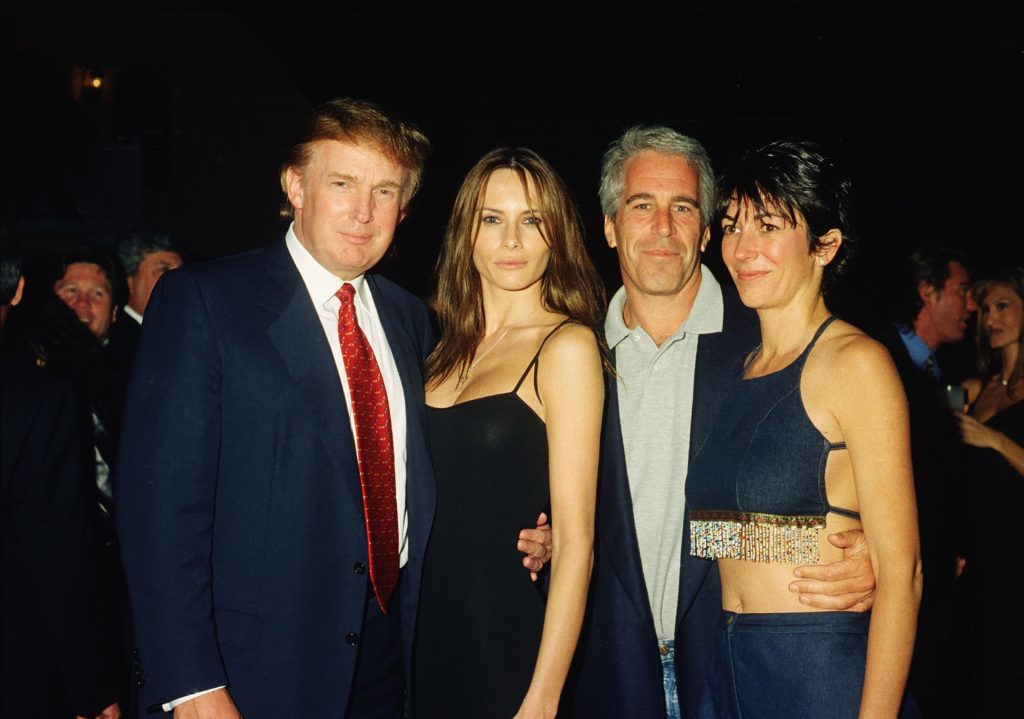
WASHINGTON — First Lady Melania Trump delivered a rare, surprise public address from the White House on Thursday, forcefully denying any relationship with convicted sex offender Jeffrey Epstein and his accomplice Ghislaine Maxwell. In a statement that has reignited the political debate surrounding Epstein, Mrs. Trump called on Congress to hold public hearings for victims of the late financier's abuse.
"I am not Epstein's victim," Mrs. Trump said, addressing what she described as "mean-spirited attempts to defame my reputation." She stated she never had a relationship with Epstein, was not introduced to her husband by him, and possessed no knowledge of his crimes. "I have never had any knowledge of Epstein's abuse of his victims," she said, adding that she was "never involved in any capacity."
The address marked a significant departure from Mrs. Trump's typically low-profile public persona and appeared to catch the White House staff off guard. President Donald Trump, in an interview with MS Now on Friday, claimed he did not know the specific content of his wife's remarks beforehand. "I knew she wanted to address rumors... but I did not know exactly what she would say," the President stated. However, former White House press secretary Stephanie Grisham expressed skepticism regarding the President's lack of prior knowledge.
Mrs. Trump's call for congressional action prompted immediate responses from lawmakers on both sides of the aisle. House Oversight Committee Chair James Comer (R-Ky.) confirmed that his committee planned to hold hearings with Epstein survivors, stating he had "always planned on having hearings." Conversely, House Democrats have issued a separate call for Mrs. Trump to testify before the panel regarding her own potential knowledge of Epstein's activities.
The First Lady's statement has drawn sharp criticism from survivors of Epstein's abuse. A group of more than a dozen victims accused Mrs. Trump of "shifting the burden" onto them, arguing that her call for hearings diverts attention from the handling of Epstein files by former Attorney General Pam Bondi. "Survivors have already shown extraordinary courage by coming forward," the group stated in a joint message.
The timing of the address has raised questions among political analysts, particularly as it coincides with heightened tensions regarding a fragile ceasefire between the U.S. and Iran. Some media outlets have suggested the statement may serve to distract from ongoing geopolitical conflicts or internal administration controversies.
Mrs. Trump's remarks also addressed specific allegations circulating in the media, including reports of emails between her and Maxwell. She characterized these claims as "lies" devoid of ethical standards, demanding that individuals and media outlets issue apologies for the smears. "The lies linking me with the disgraceful Jeffrey Epstein need to end today," she said.
While Mrs. Trump denied any involvement, legal experts note that her public denial does not necessarily preclude the possibility of future testimony. As investigations into Epstein's network continue, questions remain regarding whether the First Lady may eventually be compelled to testify under oath.
The speech has placed Mrs. Trump squarely in the center of a political storm, challenging an administration that had previously sought to move past the Epstein scandal. By demanding transparency and victim testimony, she has reignited a controversy that many in Washington hoped to leave behind.