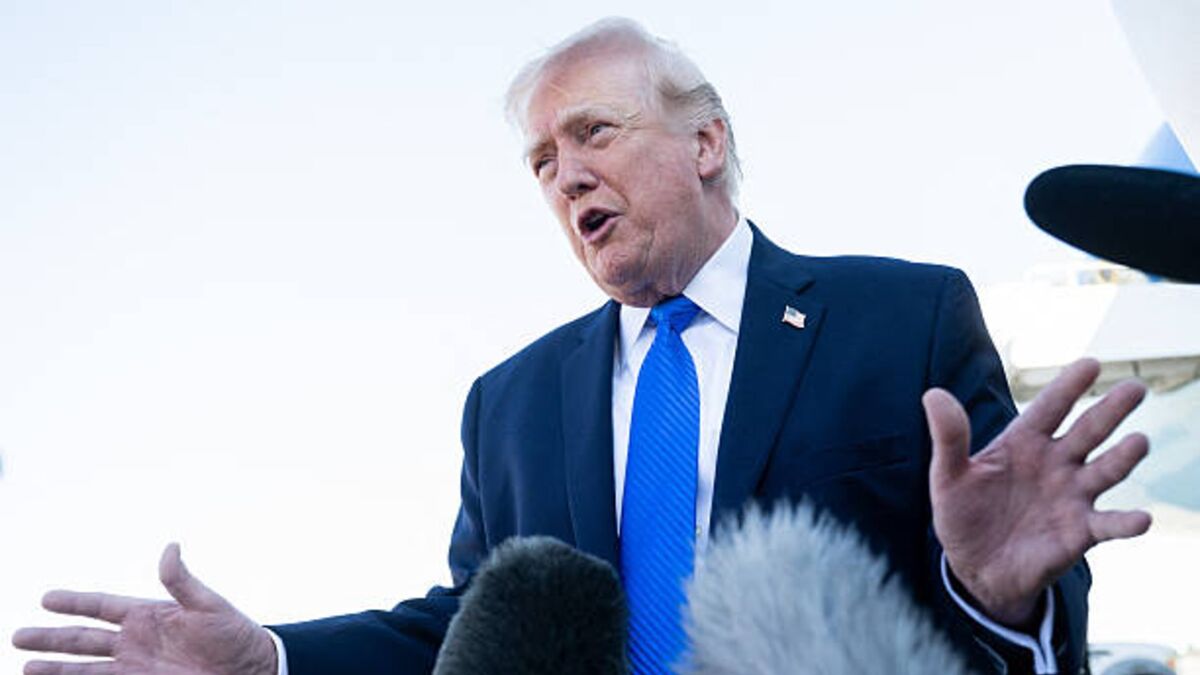
WASHINGTON — President Donald Trump announced Monday that he has ordered a five-day postponement of planned military strikes against Iran's energy infrastructure, citing "productive" talks with Tehran aimed at ending the conflict. The announcement triggered a dramatic reversal in global markets, sending oil prices tumbling and equities surging, even as Iranian officials denied the existence of any negotiations.
In a post on his Truth Social platform early Monday, Trump stated he instructed the Pentagon to "postpone any and all attacks on Iranian power plants" for a five-day period. The President claimed that U.S. negotiators and their Iranian counterparts had been engaged in "very, very strong talks" regarding the Strait of Hormuz, which has been paralyzed by the ongoing war between the U.S., Israel, and Iran.
However, the Iranian foreign ministry immediately rejected Trump's assertion. According to state news agencies, Tehran insisted there was "no direct contact with the U.S., not even through intermediaries." Iranian officials suggested Trump's decision to back down was a result of Tehran's pledge to retaliate in kind against any U.S. strikes on Iranian power plants, threatening to target similar energy infrastructure across the Middle East in response.
The market reaction was swift and severe. Minutes before Trump's announcement, trading data revealed a massive spike in oil futures activity. The Financial Times reported that roughly 6,200 Brent and West Texas Intermediate (WTI) futures contracts changed hands between 6:49 a.m. and 6:50 a.m. New York time, just minutes before the President's post at approximately 7:05 a.m. This activity represented approximately $580 million in contracts and coincided with a 14% plunge in crude prices, one of the largest intraday swings on record.
While some outlets described the trading activity as suspicious, potentially indicating insider knowledge of the impending market shift, others noted that such volatility is consistent with high-stakes geopolitical events. The Financial Times and Fortune reported on the scale of the trades, while Bloomberg noted that oil held large drops as Trump walked back his threats.
The conflict has already caused significant disruption to the global economy. The war, which began in late February following U.S. and Israeli airstrikes on Iranian targets, has sent oil prices soaring above $108 a barrel earlier in the week. The threat to the Strait of Hormuz, through which roughly 20% of global oil supply passes, has fueled fears of a prolonged energy crisis and renewed inflationary pressures.
Prior to Monday's announcement, the administration had signaled a contradictory path. On Friday, Trump declared he was "winding down" military efforts while simultaneously ordering the deployment of approximately 2,500 Marines and other service members from San Diego to the Middle East. On Sunday, he issued a 48-hour ultimatum for Iran to reopen the Strait of Hormuz or face attacks on its power grid.
The escalation followed a series of tit-for-tat strikes that targeted critical energy assets. Israel had previously struck Iran's South Pars gas field, prompting Iranian retaliation against Qatar's Ras Laffan LNG complex. In response to the surge in energy prices and global market instability, Prime Minister Benjamin Netanyahu announced Thursday that Israel would avoid future attacks on Iranian energy infrastructure.
Despite the temporary pause in strikes, market jitters persisted. Asian stocks and corporate bonds rebounded on hopes of de-escalation, but the dollar declined as investors weighed the uncertainty. Gold prices steadied after an initial drop, while U.S. Treasury yields tumbled.
Economists warn that the war continues to impact global growth and inflation. The Financial Times' Martin Wolf noted that Asia remains particularly vulnerable to the supply shocks, while MarketWatch reported rising prices and declining employment in the U.S. as companies grapple with higher energy costs.
As the five-day deadline approaches, the diplomatic landscape remains fragile. While Trump expressed a "very good chance" of reaching a deal, he also stated on Monday that the U.S. does not want a ceasefire, arguing that one is unnecessary when "obliterating" the other side. The situation leaves global markets and energy supplies in a state of flux as the U.S., Israel, and Iran continue to trade threats over the vital waterway.