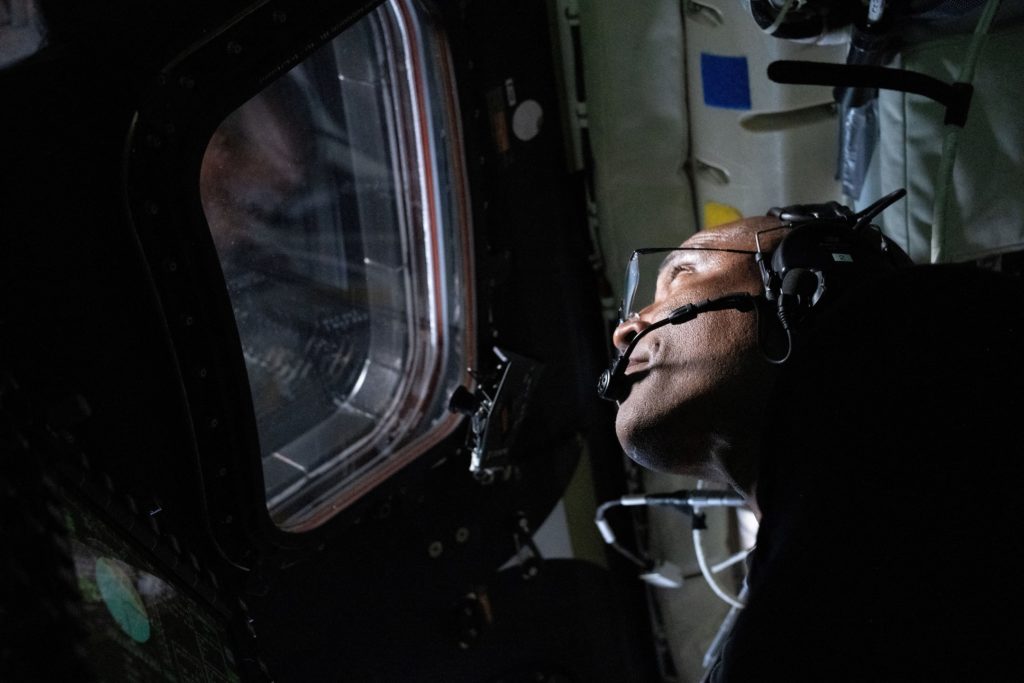
The four astronauts aboard NASA's Artemis II mission are preparing for a splashdown off the coast of Southern California on Friday, concluding a historic 10-day journey that took them farther from Earth than any humans have traveled before. The crew, consisting of Commander Reid Wiseman, Pilot Victor Glover, Mission Specialist Christina Koch, and Canadian Space Agency Mission Specialist Jeremy Hansen, completed a lunar flyby that included the first crewed mission to travel around the far side of the moon in more than five decades.
The mission, launched on April 1 aboard the Orion spacecraft named 'Integrity,' achieved several firsts, including the first time a toilet system made the journey to the lunar vicinity and the first crewed flight involving a Black astronaut, a woman, and a Canadian. On April 6, the crew captured spectacular imagery of an Earthset from the moon's far side and a solar eclipse, images that NASA and the White House have since released to the public.
While the lunar flyby has been described by the crew as 'surreal and profound,' mission officials have highlighted that the return to Earth presents significant challenges. The re-entry phase is considered one of the riskiest parts of the mission, with experts noting that the Orion spacecraft's heat shield has known design flaws that require careful monitoring. Retired NASA astronauts have described the re-entry as riskier than previous missions, though NASA officials remain optimistic about a safe landing.
During the mission, the crew engaged in several notable activities. On Monday, President Trump spoke with the astronauts via radio, congratulating them on their progress and inviting them to the White House upon their return. During the call, Mission Specialist Jeremy Hansen described the view of the far side of the moon as 'very different' from what is seen from Earth. The crew also conducted a historic 'ship-to-ship' communication with astronauts aboard the International Space Station, marking another milestone in space operations.
In an emotional moment captured on video, the crew proposed naming a crater on the moon after Carroll Wiseman, the late wife of Commander Reid Wiseman, who died of cancer in 2020. This gesture follows the Apollo tradition of naming lunar features after loved ones. The astronauts also shared personal reflections, including a proposal to name another crater after astronaut Victor Glover's wife and discussions about the health impacts of space travel on the human body.
As the crew prepares for their return, they have been conducting final checks on the Orion spacecraft and tidying up for the 'fireball' re-entry. The splashdown is scheduled to take place in the Pacific Ocean, where recovery teams are on standby. Upon landing, the astronauts will undergo medical evaluations before being transported to a debriefing location.
The Artemis II mission serves as a critical test for NASA's long-term goal of returning humans to the lunar surface. The success of this uncrewed test flight is seen as a key step toward resuming crewed lunar landings under the Artemis program. The mission has generated significant public interest, with images of the crew and their journey capturing hearts worldwide, including a widely shared photo of an Orlando mother's sons watching the launch from their front yard.
As the mission enters its final stretch, NASA continues to provide daily updates on the crew's status and progress. The successful completion of Artemis II would mark a major milestone in human space exploration, paving the way for future missions to establish a permanent presence on the moon.