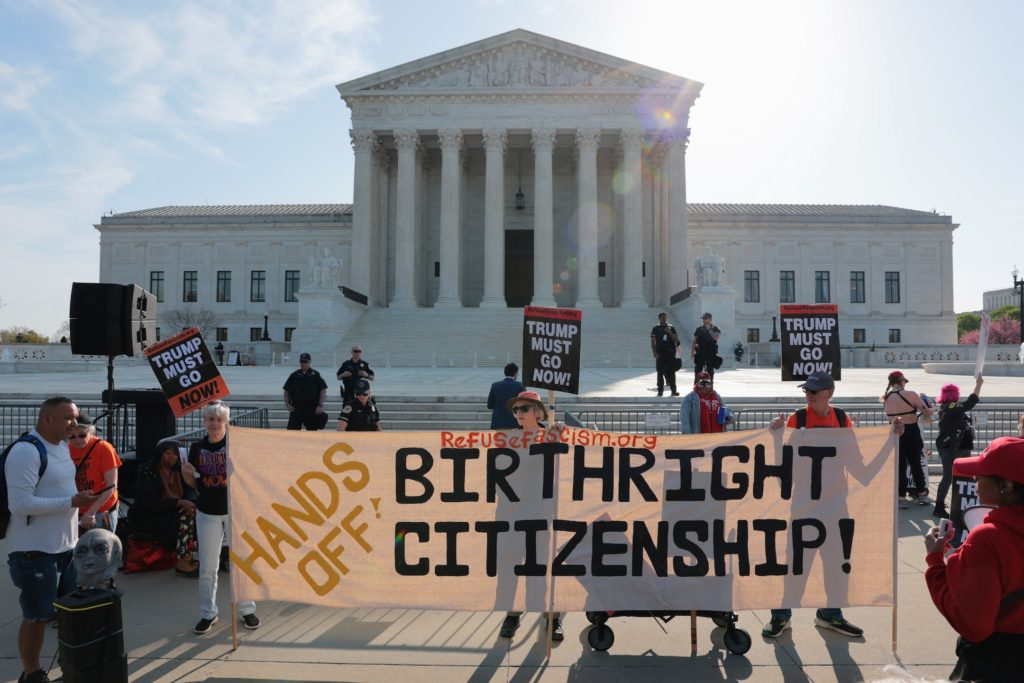
WASHINGTON — The U.S. Supreme Court appeared skeptical on Wednesday of President Donald Trump's executive order attempting to end birthright citizenship, with justices from both sides of the ideological spectrum questioning the administration's legal arguments during oral arguments in Trump v. Barbara. In a historic first, President Trump attended the proceedings in person to observe the justices hear the case challenging his order issued on his first day back in office.
The oral arguments focused on the interpretation of the 14th Amendment, which states that "all persons born or naturalized in the United States, and subject to the jurisdiction thereof," are citizens. The Trump administration argued that children born in the U.S. to undocumented immigrants or temporary visitors do not fall under "subject to the jurisdiction" and therefore should not automatically receive citizenship. However, multiple justices expressed concern over the potential legal chaos such a ruling could create.
Chief Justice John Roberts questioned why the administration invoked concerns about "birth tourism" in their legal briefs, asking what relevance that had to the constitutional interpretation at hand. Justice Amy Coney Barrett described the potential applications of the executive order as "messy," while Justice Sonia Sotomayor raised concerns that a ruling in favor of the administration could retroactively strip citizenship from individuals already born on U.S. soil.
The skepticism was not limited to the court's liberal wing. Chief Justice Roberts and Justices Barrett, Neil Gorsuch, and Clarence Thomas all engaged in rigorous questioning of Solicitor General D. John Sauer regarding the scope and precedent of the order. The justices largely avoided policy debates, focusing instead on constitutional text and historical interpretation.
President Trump's presence at the Supreme Court marked an unprecedented moment in American history. According to the Supreme Court Historical Society, there is no official record of a sitting president attending oral arguments. Trump sat in the public gallery for approximately 90 minutes, flanked by Attorney General Pam Bondi and Commerce Secretary Howard Lutnick. Reports described Trump as stone-faced during the proceedings, occasionally closing his eyes to listen.
Outside the court, hundreds of demonstrators gathered on the steps to defend birthright citizenship. Chanting slogans such as "We are an immigrant nation," protesters included teachers, students, and civil rights advocates. The rally highlighted the high stakes of the case for families across the country.
The Supreme Court is expected to issue a ruling by the end of June. All lower federal courts that have reviewed the executive order have found it illegal and issued injunctions preventing its implementation. A definitive ruling from the high court would resolve a legal battle that has divided immigration experts and constitutional scholars for over a century.
The hearing occurred against the backdrop of other significant legal and geopolitical developments. Earlier in the week, President Trump delivered a primetime televised address regarding ongoing military conflict with Iran, boasting about strikes against Iranian leadership and threatening further action. Additionally, the administration recently faced a setback when the Supreme Court rejected Trump's tariffs program, a decision that has reportedly fueled frustration within the White House.
Legal experts note that this case represents the first major test of birthright citizenship in more than 100 years. The conventional understanding, established by the 1898 Supreme Court decision United States v. Wong Kim Ark, has been that nearly anyone born on U.S. soil is a citizen, with narrow exceptions for children of foreign diplomats and occupying forces.
As the justices deliberate, the outcome will determine whether the executive branch can unilaterally alter a constitutional guarantee that has defined American citizenship for generations.