New York City Mayor Zohran Mamdani Marks 100 Days in Office Amidst Mixed Polling and Policy Setbacks

Broke: Updated:
New York City Mayor Zohran Mamdani Marks 100 Days in Office Amidst Mixed Polling and Policy Setbacks
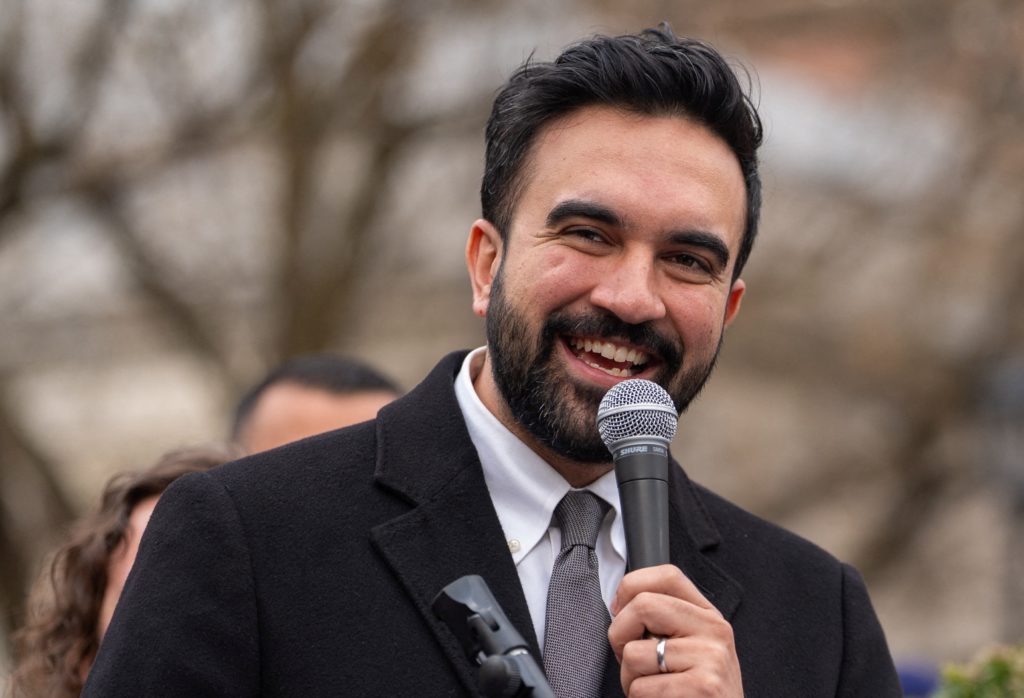
Photo: PBS NewsHour

NEW YORK — Mayor Zohran Mamdani marked his first 100 days in office this week, a milestone that underscores the rapid ascent of a Democrat who spent much of last year viewed as an improbable candidate for New York City's highest office. While the mayor has leveraged his campaign momentum to assert control over city agencies and advance a progressive agenda, early indicators suggest significant challenges in fulfilling signature promises and maintaining broad public support.

During a week of citywide appearances, Mamdani emphasized his focus on economic justice and policing reform. In an interview regarding the milestone, he acknowledged "troubling" job losses in his first quarter as mayor but maintained that his priority remains economic equity. However, business leaders and budget watchdogs have urged a shift in focus toward broader economic development.

On the issue of law enforcement, Mamdani has moved to clarify his authority over the New York Police Department. Although he frequently defers to Police Commissioner Jessica Tisch, the mayor insisted in recent statements that he retains final decision-making power on policing matters. This assertion comes as the administration navigates complex negotiations with state lawmakers in Albany.

Several of Mamdani's most prominent campaign pledges have faced delays or modifications. Most notably, the mayor conceded that his signature proposal to make city buses free will not be realized this year due to funding obstacles and ongoing legislative negotiations. Additionally, the administration has scaled back or paused other initiatives, including plans to utilize the city's rainy day fund for new social programs—a move that has drawn scrutiny from the City Comptroller, who recently released guidelines recommending caution regarding the Revenue Stabilization Fund.

Public sentiment appears divided. A poll conducted by Emerson College Polling and released Thursday found that while a plurality of New York City voters approve of Mamdani's job performance, nearly 60 percent believe the city is on the wrong track. The survey indicated discontent across Hispanic, Black, and Asian voter demographics.

Critics have intensified their scrutiny of the mayor's fiscal proposals. The New York Post reported that Mamdani has pushed for new tax measures totaling at least $23 billion, which opponents argue would impact middle-class residents. Meanwhile, President Donald Trump offered three suggestions to the mayor on his 100th day, urging him to "make it sparkle" and improve the city's image.

As Mamdani transitions from campaign promises to governance, questions remain regarding his ability to sustain the momentum of his election victory. While some observers note that maintaining public trust requires attention to "the little things," others point to early policy reversals and funding gaps as indicators of the difficulties inherent in executing a progressive platform within New York's fiscal constraints.

Coverage Analysis

The coverage of Mayor Zohran Mamdani's first 100 days reveals a stark divergence in editorial framing, where the same factual events are interpreted through fundamentally different ideological lenses. The analysis below breaks down these patterns by political spectrum.

Framing of Policy Reversals: Governance vs. Betrayal The most significant divergence occurs in how outlets frame the scaling back of campaign promises, specifically the free bus initiative and the use of rainy day funds.

  • Lean Left (NYT, Politico): These outlets frame the reversals as a natural, albeit difficult, transition from campaigning to governance. The New York Times uses neutral, procedural language like "tracking" promises and notes the mayor's acknowledgment of "troubling" job losses as a sign of transparency. The focus is on the complexity of the fiscal constraints and the negotiation with Albany.
  • Lean Right (NY Post, Washington Times): These outlets frame the same reversals as evidence of incompetence or bad faith. The New York Post employs accusatory language, using phrases like "ditches event," "flaked out," and "promises... bit the dust." The narrative shifts from 'fiscal reality' to 'broken promises,' emphasizing the gap between campaign rhetoric and administrative action as a character flaw rather than a policy challenge.
  • Right (Breitbart, Daily Wire): Here, the framing escalates from policy failure to moral and racial indictment. Breitbart omits the fiscal context entirely, reframing tax proposals as a scheme to fund a "'Black and Brown' political machine," while The Daily Wire characterizes equity plans as "racism against white people." The omission of the mayor's stated goals and the inclusion of inflammatory descriptors ("socialist import," "word salad") signals an intent to delegitimize the administration's core ideology rather than critique specific policies.

Language and Sourcing: Authority vs. Skepticism The choice of language and sourcing creates distinct narratives about the mayor's competence and intent.

  • Center (AP, PBS): These outlets maintain a focus on the process and the uncertainty of the future. The AP highlights "star power" as a neutral asset, while PBS questions whether that fame can translate to policy. They rely on broad polling data and general observations about the difficulty of governance.
  • Lean Right (NY Post): The Post relies heavily on specific, often anecdotal sourcing to build a narrative of neglect. By focusing on the mayor leaving an event early or specific tax figures ($23 billion) without immediate context, they create a sense of urgency and alarm. The language is hyperbolic ('Hizzoner,' 'raid the rainy day fund'), designed to provoke an emotional response.
  • Lean Left (NYT): The Times utilizes sourcing that emphasizes the mayor's agency and control. Headlines like "Mamdani Asserts Control Over N.Y.P.D." frame the mayor as an active leader navigating power dynamics, whereas right-leaning outlets might frame the same interaction as a power grab or instability.

Omission and Emphasis: The Role of Trump and Fiscal Reality

  • The Trump Factor: While the neutral summary notes President Trump's comments as a minor point, Lean Right and Right outlets often elevate this interaction. The Post's headline "Trump gives Zohran Mamdani three tips" frames the President as a mentor or critic, whereas left-leaning outlets largely omit this interaction to avoid validating the opposition's commentary on a Democratic mayor.
  • Fiscal Context: Lean Left sources consistently provide the context of "funding obstacles" and "legislative negotiations," explaining why promises were delayed. Right-wing sources frequently omit this context, presenting the delay as a unilateral decision by the mayor to abandon his word. Breitbart and Daily Wire go further, omitting the fiscal explanation entirely to focus on racial or ideological grievances.

Why This Matters These differences in framing fundamentally alter the reader's perception of the mayor's performance. For a New York Times reader, Mamdani is a progressive leader grappling with the harsh realities of city finance. For a New York Post reader, he is an unreliable figure who failed to deliver on his word. For a Breitbart reader, he is an ideological antagonist threatening the city's social fabric. The analysis demonstrates that while the raw data (polls, policy delays) is consistent across sources, the narrative architecture built around that data serves to reinforce pre-existing political worldviews rather than inform the public on a shared factual basis.

Coverage by Perspective

Lean-Left
4
Center
2
Lean-Right
9
Right
3

Source Similarity

Connections show how similarly each outlet covered this story. Thicker lines = more similar framing.

Sources (11)

  • politico
  • rcp
  • dailywire
  • washtimes
  • pbs
  • nypost
  • ap
  • thehill
  • nyt
  • breitbart
  • foxnews

Original Articles (18)

Lean Right Mamdani ditches event marking 100th day as mayor early — leaving promised ‘fix’ to city workers — New York Post
Lean Left Mamdani's 100th day — Politico
Center Mamdani hits 100 days as mayor of New York City — PBS NewsHour
Lean Right Getting New York City To Believe in Government — RealClearPolitics
Lean Right Trump gives Zohran Mamdani three tips to improve NYC on his 100th day as mayor: ‘Make it sparkle’ — New York Post
Lean Right Mamdani pushed combined $23B worth of new NYC taxes in just his first 100 days — New York Post
Lean Right From housing vouchers to homeless encampments – the promises Zohran Mamdani broke in his first 100 days in office — New York Post
Center In his first 100 days, Mamdani brings a unique star power to New York City governance - AP News — Associated Press
Right Mamdani’s Newest Policy Plan Is Just Straight-up Racism Against White People — The Daily Wire
Lean Left Tracking 7 of Mamdani’s Biggest Campaign Promises — New York Times
Lean Right Mamdani concedes free bus pledge won't be fulfilled this year — Washington Times
Lean Right Zohran Mamdani’s grand plan to raid NYC’s rainy day fund could be blocked as comptroller makes move — New York Post
Right Mamdani ripped after conceding key campaign pledge won't happen this year — Fox News
Lean Right Majority of voters say NYC on the wrong track under Zohran Mamdani: poll — New York Post
Lean Left Mamdani Asserts Control Over N.Y.P.D., Saying He Would Overrule Tisch — New York Times
Lean Right More New York City residents back Mamdani but say city on wrong track: Poll — The Hill
Right Mayor Mamdani Demands Higher Taxes for His 'Black and Brown' Political Machine — Breitbart
Lean Left Mamdani Acknowledges ‘Troubling’ Job Losses in 100 Days’ Interview — New York Times