WASHINGTON — President Donald Trump announced early Sunday that U.S. special operations forces had successfully rescued the second crew member of an F-15E Strike Eagle shot down over Iranian airspace, completing a high-stakes mission that began Friday. The rescue comes as the President issued a stark 48-hour ultimatum to Tehran, threatening massive strikes on Iranian infrastructure if the Strait of Hormuz is not reopened.
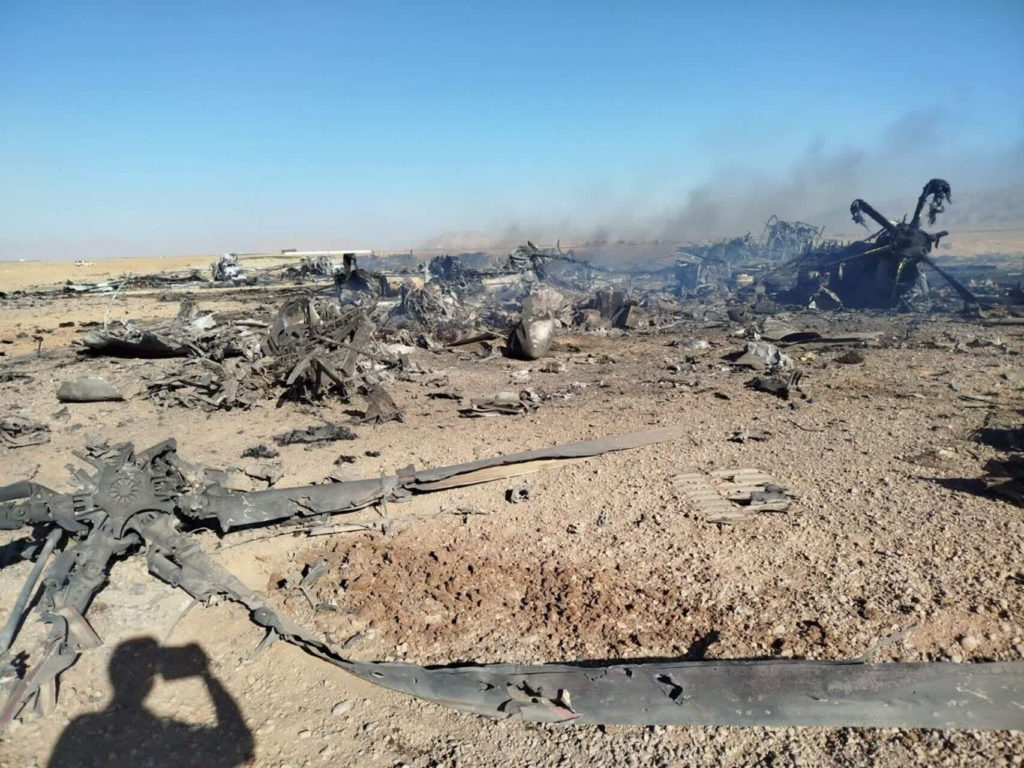
The downing of the F-15E marks a significant escalation in the ongoing conflict, representing the first time an American combat aircraft has been shot down by enemy fire since the war began five weeks ago. The two-seat jet was struck while operating over southwestern Iran, prompting both crew members to eject. While one airman was rescued Friday near the crash site, the second remained missing behind enemy lines for nearly 48 hours.
President Trump described the successful extraction of both service members as an "Easter Miracle" in a series of social media posts. He credited the rescue team with being "brilliant, strong, decisive," and noted that the mission was executed despite a "large and violent" enemy presence. According to U.S. officials, the rescue operation involved intense firefights and required precise coordination between special forces, air support, and intelligence assets. Israeli intelligence reportedly played a role in facilitating the mission, according to officials speaking on condition of anonymity.
Following the rescue, President Trump escalated his rhetoric against Iran. In an expletive-laden message posted on Truth Social, the President warned that if Iran does not open the Strait of Hormuz by Tuesday night, the United States will target its critical infrastructure. "Tuesday will be Power Plant Day and Bridge Day, all wrapped up in one," Trump wrote. He further stated that the U.S. military has not yet begun to "destroy what's left" in Iran and threatened that "all Hell will rain down" if the deadline is missed.
The conflict has intensified over the past week. Iranian state media released images of wreckage from the downed F-15E and announced a $60,000 bounty for the capture of any American crew members. Iranian officials have also called on their public to assist in locating the missing pilot, though U.S. forces successfully extracted both airmen before capture was possible.
The downing of the aircraft has complicated U.S. military objectives in the region. While President Trump had previously asserted that the U.S. military had "completely decimated" Iran's capabilities, the successful shootdown of an F-15E and a subsequent A-10 Thunderbolt strike aircraft suggests continued Iranian air defense capabilities. Additionally, during the rescue operation for the first crew member, a U.S. Black Hawk helicopter and another search-and-rescue aircraft were reportedly struck by Iranian fire but managed to return safely.
The crisis has drawn international attention, with European leaders and other nations expressing concern over the potential for broader regional conflict. The Strait of Hormuz, a critical chokepoint through which approximately 20% of the world's oil supply passes, remains closed to commercial shipping due to Iranian threats. The United Kingdom has convened a group of 41 nations to discuss contingency plans for reopening the strait.
Iranian military actions have also expanded beyond the immediate theater. Reports indicate that Iranian missiles and drones struck oil refineries in Kuwait, damaging desalination plants and power infrastructure. In response to U.S. threats regarding bridges, Iranian state media reported that a major bridge linking Tehran to the city of Karaj was destroyed overnight.
Despite the downing of two U.S. aircraft, President Trump maintained that the incident would not derail ongoing negotiations or alter his strategic goals. "It's war," Trump told reporters, indicating that the loss of aircraft would not impact the administration's pressure campaign. However, defense analysts and former officials have expressed concern over the risks of escalation.
The rescue operation concludes a tense period for U.S. forces operating deep inside hostile territory. Both rescued airmen were reported to be in stable condition and have been evacuated for medical treatment, according to U.S. officials. The successful extraction is being hailed by the administration as a demonstration of American military prowess, even as the threat of further strikes looms over the region with Tuesday's deadline approaching.