U.S. Inflation Surges to 3.3% in March Amid Energy Shock from Iran Conflict

Broke: Updated:
U.S. Inflation Surges to 3.3% in March Amid Energy Shock from Iran Conflict
Photo: PBS NewsHour

U.S. consumer prices rose 3.3% in March compared to the same period last year, marking the highest annual inflation rate in nearly two years and the largest monthly increase since June 2022, according to data released Friday by the Bureau of Labor Statistics (BLS). The surge was primarily driven by a sharp spike in gasoline prices following an oil shock linked to the ongoing conflict between the United States, Israel, and Iran.

The Consumer Price Index (CPI) increased 0.9% in March, the largest single-month gain in nearly four years. Economists had largely anticipated the rise, with many predicting that energy costs would rebound as tensions in the Middle East escalated. The report represents the first major economic indicator to fully capture the impact of the war on U.S. consumer prices.

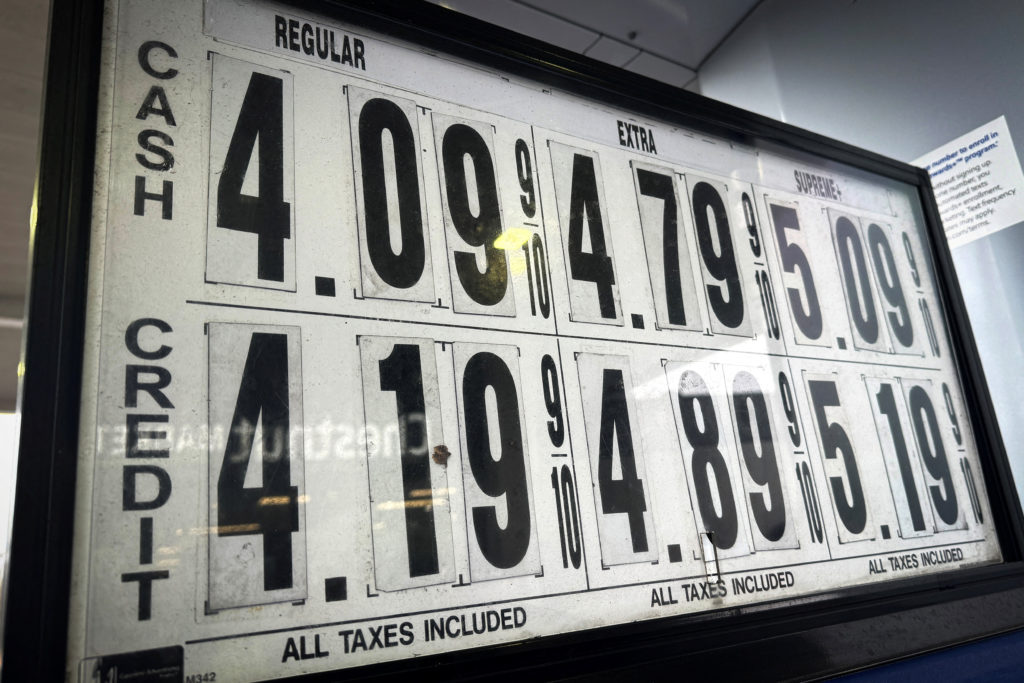
Gasoline prices were the primary catalyst for the inflation spike, posting their largest monthly percentage increase in decades. The BLS data indicates that energy costs have shifted inflation's trajectory from a slow, gradual decline toward the Federal Reserve's 2% target to a sharp increase. The conflict in the Middle East triggered one of the largest oil shocks in recent decades, directly affecting fuel costs at the pump for American consumers.

While headline inflation jumped significantly, some reports noted that price pressures remained relatively muted outside of the energy sector. The core CPI, which excludes volatile food and energy prices, saw less dramatic movement compared to the headline figure. However, the broader economic uncertainty introduced by the war adds a new layer of complexity to the Federal Reserve's decision-making process regarding interest rates.

The inflation report arrives amidst a broader economic landscape complicated by other factors, including previous tariff policies and lingering post-pandemic adjustments. The 3.3% annual rate is the highest reading since early 2024, reversing a trend of cooling prices that had characterized much of the previous year. Analysts suggest this data will provide a critical initial glimpse into how the U.S. economy is absorbing the geopolitical shockwaves of the Iran conflict.

The Bureau of Labor Statistics released the March CPI report on Friday, confirming that the energy sector's volatility was sufficient to push overall inflation well above the Fed's long-term goal. As markets digest the figures, attention now turns to whether this spike is a temporary reaction to energy supply disruptions or if it signals a more persistent inflationary trend driven by geopolitical instability.

Coverage Analysis

The coverage of the March CPI report reveals distinct editorial priorities across the political spectrum, primarily diverging on how to frame the relationship between geopolitical conflict, economic policy, and consumer impact. While all outlets agree on the raw data (3.3% annual inflation driven by energy), the narrative framing shifts significantly based on political alignment.

Framing of Causality and Responsibility: The most striking difference lies in how outlets attribute the cause of inflation. Center-left and Left-leaning sources (Vox, NYT, HuffPost) consistently frame the event as a direct consequence of external geopolitical instability ('Iran war,' 'oil shock') that disrupts market trajectories. The language used is often passive regarding the administration's role, focusing on 'shocks' and 'uncertainty.' Conversely, Right-leaning outlets (Washington Examiner, Breitbart) explicitly link the inflation to domestic policy failures. The Washington Examiner's headline and text reference 'President Trump's war on Iran' (noting the prompt's context of a Trump administration) and immediately pivot to political attacks, framing the inflation not just as an economic event but as a failure of Democratic governance ('Democrats attack Trump...'). Breitbart introduces the term 'Warflation,' a loaded political neologism that frames inflation as an inevitable byproduct of war, implicitly arguing against interventionist foreign policy.

Emphasis on Core vs. Headline Data: The handling of 'Core CPI' (inflation excluding volatile food and energy) serves as a key differentiator. Center and Left-leaning outlets (NPR, PBS, NYT) mention the core CPI to provide context that price pressures outside energy are 'muted' or 'less dramatic,' suggesting the spike is an anomaly rather than a systemic failure. This framing aims to reassure readers that the underlying economy remains stable. In contrast, Right-leaning outlets like Breitbart emphasize this distinction to argue that the inflation is 'limited to energy prices,' using it as evidence that the broader economy is resilient and that the headline number is misleading. This serves a dual purpose: validating the 'Warflation' narrative while simultaneously downplaying the severity of the headline 3.3% figure to minimize political damage or, conversely, to highlight that the administration's policies are being unfairly blamed for a temporary energy spike.

Language and Sourcing: The language used to describe the conflict varies. Left-leaning sources use neutral or descriptive terms like 'conflict,' 'tensions,' and 'war with Iran.' Right-leaning sources, particularly The Hill and Washington Times, use more active or aggressive phrasing like 'military operation' or 'war on Iran,' which can imply a more direct, perhaps controversial, U.S. involvement. The sourcing also differs; Left and Center outlets heavily cite the BLS data to establish objective facts before interpreting them. Right-leaning sources, particularly Breitbart and The Daily Wire, often juxtapose the BLS data with immediate political commentary or 'attacks' from opponents, effectively merging economic reporting with partisan news cycles.

Omission of Context: Notably, the Center and Left-leaning coverage often omits specific details about previous tariff policies or domestic spending unless directly relevant to the 'uncertainty' narrative. The Right-leaning coverage, however, frequently omits the 'muted core inflation' argument in favor of a broader critique of affordability and policy, or conversely, uses the 'muted core' to argue that the administration is being scapegoated. The omission of the Federal Reserve's specific reaction in Right-leaning pieces (compared to their inclusion in NYT and NBC) suggests a focus on the immediate political fallout rather than long-term monetary policy implications.

Why This Matters: These differences matter because they shape public perception of who is to blame for rising costs. If a reader consumes only Left/Center news, the inflation spike is viewed as an unfortunate external shock that requires patience and steady Fed policy. If a reader consumes Right-leaning news, the same data is framed as evidence of policy failure or the inherent cost of war, fueling political polarization. The use of terms like 'Warflation' versus 'Oil Shock' fundamentally changes the emotional resonance of the data, turning an economic statistic into a political weapon.

Coverage by Perspective

Left
2
Lean-Left
7
Center
3
Lean-Right
3
Right
2

Source Similarity

Connections show how similarly each outlet covered this story. Thicker lines = more similar framing.

Sources (14)

  • npr
  • washexaminer
  • dailywire
  • guardian
  • washtimes
  • pbs
  • nbc
  • vox
  • thehill
  • abc
  • huffpost
  • ap
  • nyt
  • breitbart

Original Articles (17)

Left Why inflation is up — Vox
Lean Left WATCH: Prices surged in March after oil shock set off by Iran war — ABC News
Lean Left U.S. Inflation Surged in March as Iran War Pushed Up Prices — New York Times
Lean Left Prices surged in March after major oil shock: BLS inflation report — ABC News
Lean Left A Record Jump in U.S. Gasoline Prices Is Squeezing Consumers — New York Times
Center Soaring gas prices leads to biggest monthly inflation spike in four years in March — PBS NewsHour
Lean Right Inflation rate rises to 3.3 percent in March amid hiked energy costs from Iran war — The Hill
Center Inflation surges to highest level in nearly 2 years as energy costs spike — NPR News
Lean Right Inflation surged in March due to jump in gas prices during Iran war — Washington Times
Left Soaring Gas Prices Lead To Biggest Monthly Inflation Spike In 4 Years In March — HuffPost
Right March Consumer Prices Show Warflation Limited To Energy Prices — Breitbart
Lean Left US inflation soars in March as war on Iran drives economy into uncertainty — The Guardian US
Lean Right Inflation jumped to 3.3% in March as Iran war drove up oil prices — Washington Examiner
Center Inflation could jump by the most in nearly 4 years in the wake of the Iran war - AP News — Associated Press
Lean Left March inflation report to offer first glimpse of Iran war's economic impact — NBC News
Right Inflation Report Shows Iran War Impact As A Key Piece Tells The Story — The Daily Wire
Lean Left Fed’s Inflation Woes Preceded the War With Iran — New York Times