US Military Operation and Sanctions Intensify Economic Tensions with Iran, Impacting Trade
-
Speaking at a press conference, Mr. Bessent praised the U.S. military operation for giving the administration the ability to wage economic war against Iran. He insisted that the new sanctions will further isolate Tehran from the world economy.
Compare 6 other versions
Financial TimesScott Bessent threatens wider US sanctions on Iran’s economic partners Treasury secretary warns of further measures in bid to increase pressure on Tehran
ZeroHedgeLate Monday afternoon, Treasury Secretary Scott Bessent unveiled nearly 60 Iran-linked sanctions under what he called Operation Economic Outcast, a campaign designed to sever Iran's remaining trade, technology and financial lifelines.
BBC BusinessScott Bessent said the US would sever all economic ties with the country in "an economic D-Day" and that any nation partnering with Iran financially would also be isolated.
FortuneOn Monday, Bessent is expected to detail the “economic D-Day” the U.S. will level against Iran, focusing on countries that do business with the regime.
CNBCThe U.S. announced an "economic D-Day" campaign Monday to isolate Iran from the global economy, threatening penalties against "enablers" that continue doing business with Tehran.
BloombergThe US‘s Economic `D-Day’ for Iran Doesn’t Live Up to Bessent’s Hype US efforts to isolate Iran look more like business as usual than a game-changer.
-
China purchases at least 90% of Iran’s crude oil exports, and Russia, while a smaller economic partner than Beijing, still provided nearly $5 billion in trade in 2025. Moscow and Tehran have also cooperated closely on security for years, with the Kremlin reportedly sharing tracking data with Iran’s military during the first weeks of the war with the U.S.
Compare 1 other version
CNBCChina is the biggest buyer of Iranian oil and serves as a crucial link to the global economy for Tehran, accounting for about 90% of its oil exports, according to the U.S. government.
-
With the United Arab Emirates, Iran’s largest trading partner, suspending all trade with Tehran, officials within the Islamic republic have threatened retaliation over the economic blows.
Compare 3 other versions
FortuneMeanwhile, the United Arab Emirates—which has historically offered Iran vital access to global markets—has already declared an embargo on trade and transactions with the Islamic Republic.
CNBCThat relationship hit a snag last week as the UAE moved to suspend all trade and financial transactions with Iran, following two ballistic missiles fired toward Emirati territory, one of which targeted UAE-owned tankers.
Washington Times BusinessHowever, he indicated that the United Arab Emirates, which publicly ended its trade relationship with Iran last week, was a positive sign.
-
Iraq, the UAE, Oman, Turkey and Pakistan all have relatively extensive economic ties to Tehran, mostly through oil imports and the export of manufactured goods.
Compare 1 other version
CNBCTurkey maintains significant commercial ties with Tehran, importing Iranian natural gas and exporting manufactured goods south.
-
China warns US it could retaliate over Iran sanctions Beijing says it will take ‘all necessary measures’ if Washington expands crackdown on business with Tehran
Compare 1 other version
ZeroHedgeFinancial Times reports that Beijing could retaliate if Chinese firms are included in any expansion of the economic war against Iran.
-
Iranians queue for petrol as US blockade bites Long lines form in capital as officials warn that war and inflation are triggering fuel shortages
Compare 3 other versions
ZeroHedgeAccording to Bloomberg, Iran is facing mounting fuel shortages as the US squeezes its access to imports, stretching supplies of a commodity that previously sparked bouts of unrest in the country.
FortuneIran’s economy is under extreme pressure from the U.S. naval blockade, which has slashed oil exports that drive the country’s revenue as well as critical imports.
Washington Times BusinessThe sanctions add to an already suffocating array of tactics, including a comprehensive naval blockade of Iran’s ports, which aims to eliminate Tehran’s ability to export its oil.
-
One key is how any new U.S. sanctions might affect China, the No. 1 buyer of Iranian crude oil
Compare 1 other version
FortuneThe sanctions could put a big target on Chinese companies, which buy Iranian oil and handle Iran-linked financial transactions.
-
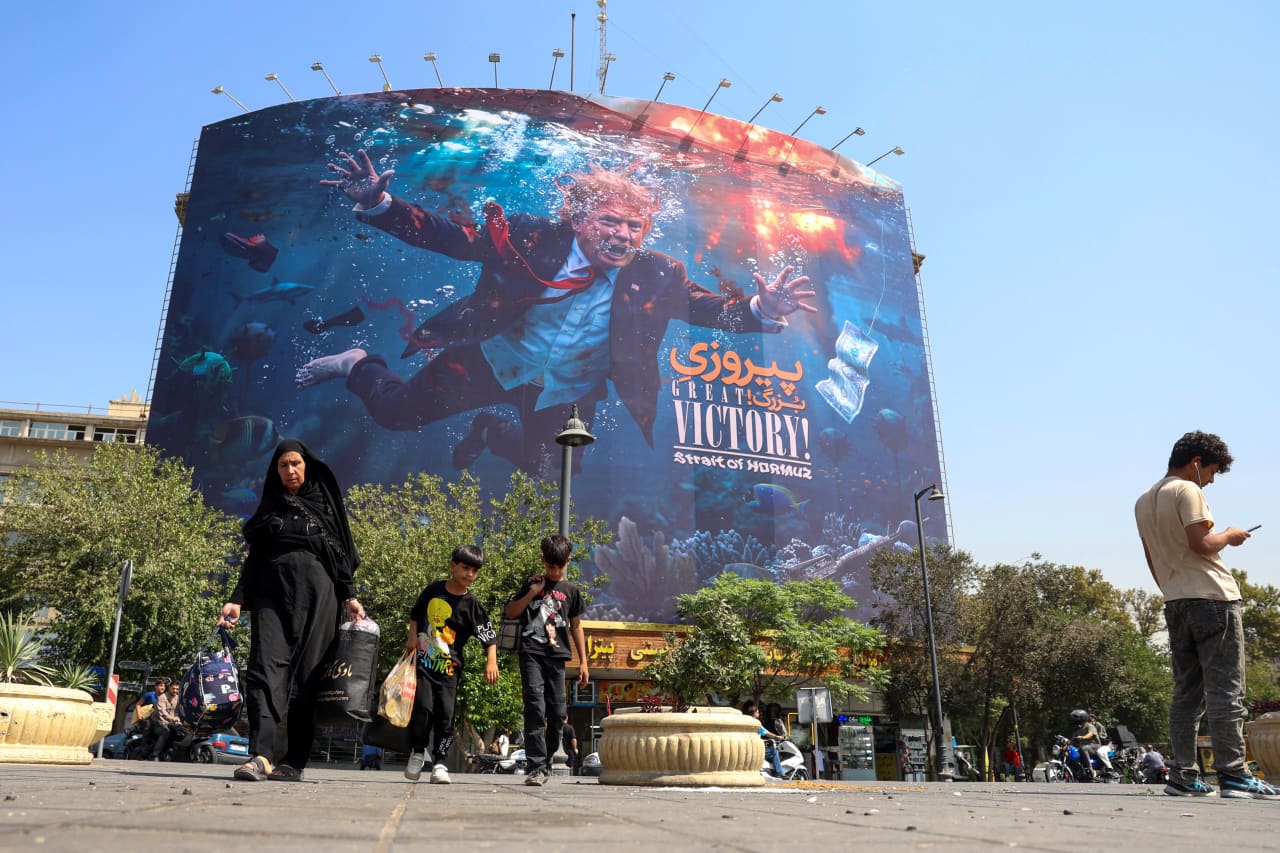
One fifth of the world's oil and gas usually passes through strait, a waterway south of Iran, but the flow has been effectively blocked by the country since the conflict began at the end of February.
Compare 1 other version
Washington Times BusinessIn retaliation, Iran effectively closed the Strait of Hormuz, a small waterway connecting the Persian Gulf and the Gulf of Oman, with a combination of small boats, drones and missiles. At least one-fifth of the world’s oil and natural gas moves through the strait each year and, and its closure has driven up energy prices globally.
7 details only one outlet reported
Independent claims that didn't surface elsewhere in our corpus. Treat as supplementary — not corroborated across outlets.
-
01 CNBC The move is part of Washington's bid to sever the trade lifeline that has sustained Tehran's economy through nearly six months of war.
-
02 Bloomberg China Defends Cooperation With Iran Amid US Warnings | Opening Trade 8/25/2026 Beijing threatened to retaliate against the US and signaled it won’t back away from its cooperation with Iran after the Trump administration’s latest sanctions targeted businesses in China and Hong Kong. Bessent unveiled dozens of new sanctions on entities, individuals and vessels, but the main thrust of a high-profile press conference was threatening so-called secondary sanctions against companies and countries that continue doing business with Iran. The Opening Trade has everything you need to know as markets open across Europe. With analysis you won't find anywhere else, we break down the biggest stories of the day and speak to top guests who have skin in the game. Hosted by Anna Edwards, Guy Johnson and Tom
-
03 ZeroHedge The Trump administration's "Operation Economic Outcast" has expanded the sanctions campaign across China and Hong Kong, targeting dozens of individuals and businesses while intentionally holding off on sanctioning major Chinese banks that keep Tehran connected to the global financial system. Beijing, meanwhile, signaled earlier Tuesday that it would not retreat from its economic relationship with Iran, raising the risk that Trump's economic war against Tehran could evolve into a direct confrontation with China, the largest buyer of discounted Iranian crude.
-
04 Fortune The idea is to kill two birds with one stone: getting Iran to fully reopen the Strait of Hormuz would lower oil prices and take pressure off the bond market as investors lower inflation expectations. Still, Bessent faces a tall order in trying to coerce an Iranian government that’s committed to holding on to the strait.
-
05 MarketWatch Futures Movers Oil trades lower even as Bessent promises ‘economic D-Day’ announcement on Iran
-
06 BBC Business Published The US Treasury Secretary has threated Iran with "the single greatest financial offensive ever", claiming the US-Israel war with Iran was "entering its endgame".
-
07 Washington Times Business The new sanctions are intended to force businesses and countries to sever their remaining economic ties to Tehran and facilitate a faster collapse of the Iranian economy — an ambitious goal, given Iran’s proven ability to withstand financial pressure from Western nations.
Fact Corroboration
Which sources independently confirm the same facts. Hover a claim to see its sources, or a source to see what it corroborates.
Coverage by Perspective
Source Similarity
Connections show how similarly each outlet covered this story. Thicker lines = more similar framing.
Sources (9)
- bbc-biz
- ft
- cnbc
- marketwatch
- fortune
- commondreams
- bloomberg
- zerohedge
- washtimes-biz