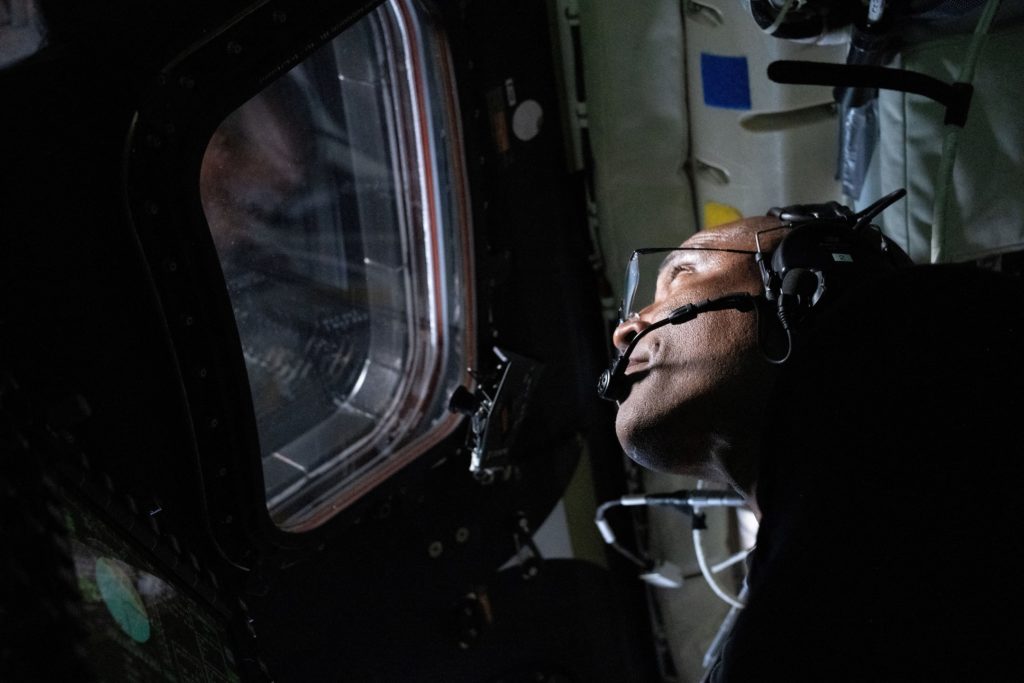
The four astronauts aboard NASA's Artemis II mission are preparing for a high-stakes splashdown off the coast of Southern California on Friday, concluding a 10-day historic journey that took them farther into space than any humans have traveled before. The crew, consisting of Commander Reid Wiseman, Pilot Victor Glover, Mission Specialist Christina Koch, and Canadian Space Agency Mission Specialist Jeremy Hansen, is currently on the return leg of their mission to orbit the Moon.
The Orion spacecraft is scheduled to re-enter Earth's atmosphere on Friday, a phase that former NASA astronaut Jeffrey Hoffman and others have described as one of the riskiest parts of the mission. The spacecraft relies on a heat shield that has been identified as having known design flaws, though NASA officials have expressed optimism regarding the vehicle's performance. The splashdown will mark the end of a mission that achieved several firsts, including being the first crewed flight to travel beyond low-Earth orbit since the Apollo era.
During their lunar flyby, the crew captured and released historic imagery of an Earthset from the Moon's far side and a solar eclipse. They also conducted the first-ever direct "ship-to-ship" communication between astronauts on a lunar voyage and those aboard the International Space Station. On Monday, President Trump spoke with the crew via telephone after they completed their lunar flyby; during the call, Hansen described the view of the far side as "very different." The President subsequently invited the astronauts to the Oval Office upon their return.
The mission has been marked by significant human milestones and emotional moments. The crew became the first to include a Black astronaut, a woman, and a Canadian on a mission around the Moon. In an emotional moment captured on video, the crew proposed naming a lunar crater "Carroll" after Wiseman's late wife, who died of cancer in 2020, following the Apollo tradition of naming lunar features after loved ones. Additionally, the mission successfully tested a new space toilet designed for deep-space travel.
As they prepare to return, the astronauts have described their voyage as "surreal and profound." Koch noted that the experience deepened her appreciation for Earth, stating, "Everything we need, Earth provides." The crew has also engaged with the public through various means, including a press conference held from space and a shared morning playlist intended to bring listeners closer to the mission.
The Artemis II flight serves as a critical test for NASA's broader goal of establishing a permanent human presence on the Moon under the Artemis program. While the mission has been largely successful, experts note that the re-entry and splashdown remain critical hurdles. The crew will face a period of communication blackout for approximately 40 minutes during the re-entry phase as they pass behind the Moon. Following a safe landing, the astronauts will be recovered by naval vessels before being transported to shore.