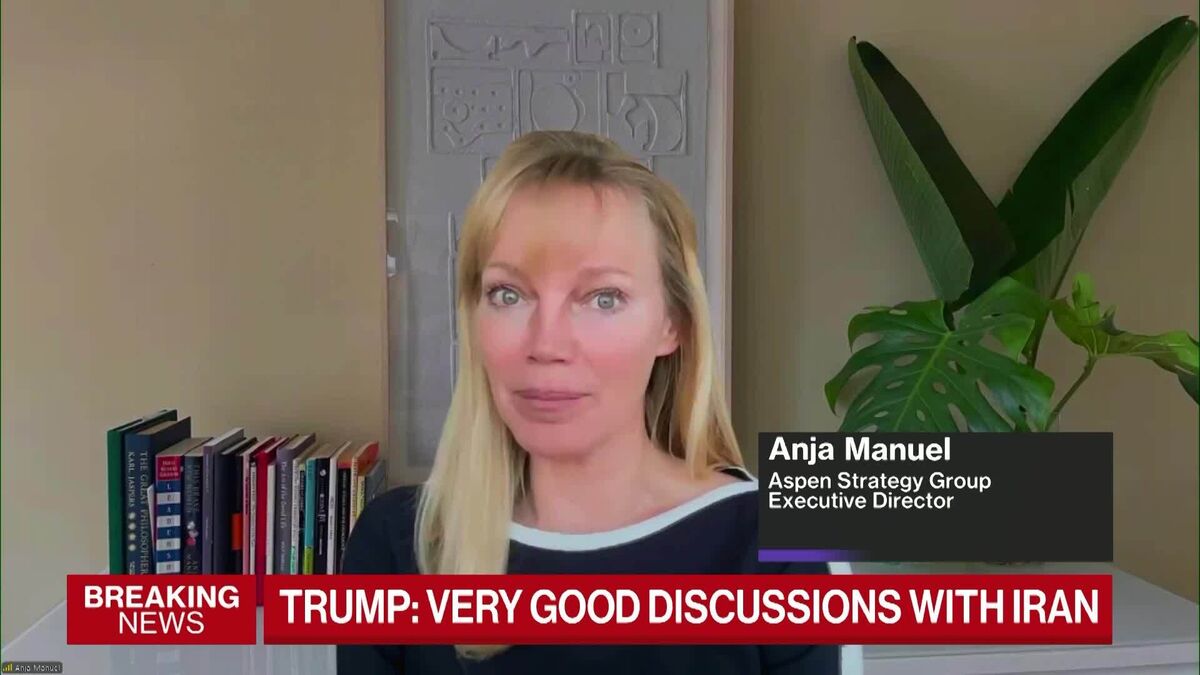
WASHINGTON — President Donald Trump announced Monday that he has ordered the Pentagon to postpone military strikes against Iranian power plants and energy infrastructure for a five-day period, citing what he described as "productive" talks with Tehran aimed at reopening the Strait of Hormuz. However, Iran's foreign ministry immediately denied the existence of any direct negotiations with the United States, accusing Washington of backing down only after Tehran threatened retaliatory attacks on regional energy facilities.
In a Truth Social post early Monday, Trump stated that the United States was "very close to meeting our objectives" and is considering winding down military efforts in the Middle East. The announcement triggered an immediate rally in global stock markets and a sharp drop in oil prices, which had surged to near $120 per barrel following the escalation.
Despite Trump's assertion of diplomatic progress, Iranian state media reported that no contact has occurred between the two nations. Fars News Agency quoted an unnamed source stating, "There is no direct contact with Trump, not even through intermediaries." The agency further claimed that the U.S. president retreated from his threat to "obliterate" Iranian power plants only after Tehran vowed to target similar infrastructure across West Asia, including desalination facilities vital for millions of civilians.
The crisis centers on the Strait of Hormuz, a critical maritime chokepoint through which roughly one-fifth of global oil and liquefied natural gas (LNG) flows. The waterway has been effectively closed to commercial shipping for nearly four weeks following the start of a U.S.-Israeli military campaign against Iran on February 28. The conflict has escalated into a tit-for-tat exchange of strikes against energy infrastructure, including attacks on Iran's South Pars gas field and Qatar's Ras Laffan LNG complex, the world's largest export facility.
QatarEnergy CEO Saad al-Kaabi reported that Iranian strikes have caused "extensive damage" to the facility, which supplies about one-fifth of the world's LNG. The CEO estimated that the repairs could take up to five years and result in $20 billion in lost annual revenue. The disruption has sent global energy prices soaring, with diesel fuel in the United States exceeding $5 per gallon for the first time since December 2022, and gasoline prices reaching their highest levels since 2023.
The economic fallout has rippled through global markets and central banks. The Federal Reserve held its benchmark interest rate steady this week but noted that the war has introduced significant uncertainty regarding inflation. European Central Bank officials have warned of potential rate hikes if energy price shocks persist, while the Bank of Japan also maintained its rates amid rising inflation risks. In Asia and Europe, stock markets tumbled on Sunday before recovering Monday following Trump's announcement.
Domestically, the conflict has sparked political debate and public concern. Polling data indicates that 68% of American voters oppose a ground invasion of Iran, and a survey of Trump's own base found that 79% favor a quick end to the war. Despite this, reports indicate the Pentagon has deployed an additional 2,500 Marines and roughly 4,000 total service members to the region. Israeli Prime Minister Benjamin Netanyahu has also called for a "ground component" to the conflict, though he recently stated that Israel would avoid future attacks on Iranian energy assets following the backlash from strikes on Qatar.
As the five-day deadline approaches, maritime traffic remains sparse. While a few vessels, including Indian-flagged tankers and ships from nations supporting the waterway's freedom of navigation, have managed to transit the strait, most commercial shipping remains halted. Analysts warn that a prolonged closure could lead to a global food crisis, as rising fuel costs threaten fertilizer exports and agricultural production in the United States and abroad.
The situation remains volatile, with both sides maintaining high rhetoric. While Trump has suggested the Strait of Hormuz could be "jointly controlled" in the future, Iran continues to threaten attacks on key infrastructure if its demands are not met. The coming days will be critical in determining whether the diplomatic pause holds or if the conflict expands further into a broader regional war.