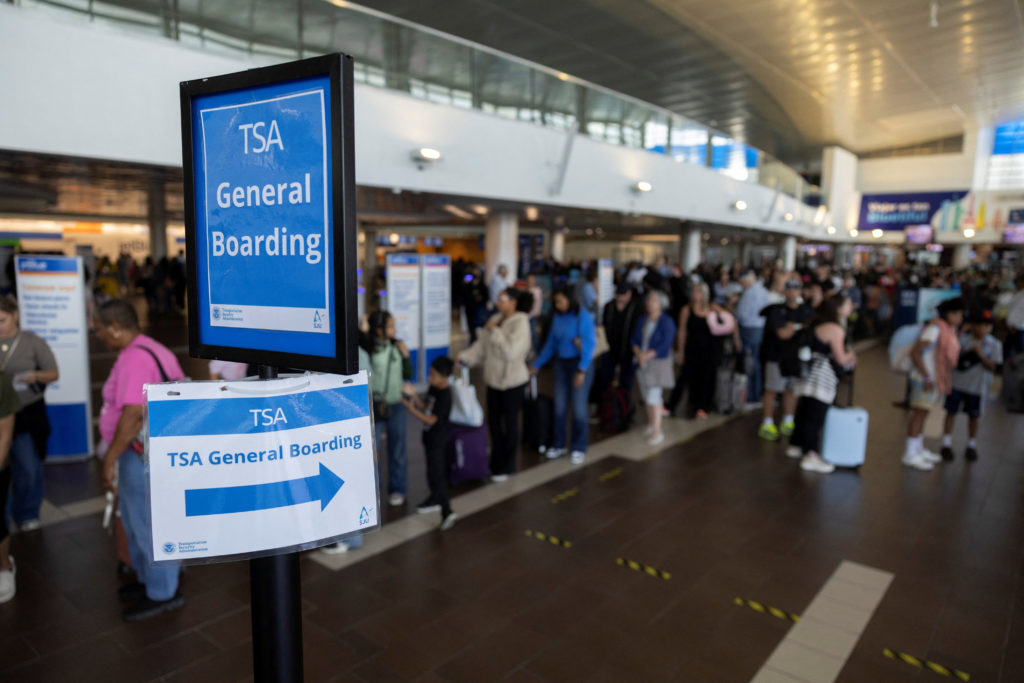
WASHINGTON — The U.S. House of Representatives on Friday rejected a bipartisan Senate deal to fund the Department of Homeland Security (DHS), instead passing a rival measure that funds the entire agency for eight weeks. The move, which passed 213 to 203 along largely party lines, effectively prolongs the partial government shutdown that has disrupted travel and left thousands of federal workers without pay for weeks.
The Senate had approved a funding package early Friday morning by unanimous consent that would have restored operations for most DHS components, including the Transportation Security Administration (TSA) and Coast Guard. However, the bill excluded funding for Immigration and Customs Enforcement (ICE) and parts of Customs and Border Protection (CBP), a condition that House Speaker Mike Johnson, R-La., declared unacceptable.
"This gambit that was done last night is a joke," Johnson told reporters, signaling the House GOP's refusal to accept the Senate's terms. The Speaker blamed Democrats for derailing efforts, stating that they were blocking full funding to prevent deportations and enforce an "immigration agenda."
Following the House vote, President Donald Trump signed an executive order instructing DHS Secretary Markwayne Mullin to immediately pay TSA agents using existing funds. The President characterized the funding impasse as a national emergency, citing growing security lines at airports and financial hardship for workers who have gone without pay for over 40 days.
"Because the Democrats have recklessly created a true National Crisis, I am using my authorities under the Law to protect our Great Country," Trump said in a statement. The order is expected to allow TSA workers to receive paychecks by Monday, though aviation experts warn that airport security lines may remain congested for days or weeks as staffing levels normalize.
The Senate's initial deal, which passed without a roll call vote, was viewed by Democrats as a victory for ending the shutdown of critical agencies. Senate Majority Leader John Thune, R-S.D., had presented the measure as a "last and final" offer to break the deadlock. However, House Republicans, backed by the Freedom Caucus, revolted against the compromise, demanding full funding for immigration enforcement agencies.
Three House Democrats — Henry Cuellar of Texas, Don Davis of North Carolina, and Marie Gluesenkamp Perez of Washington — joined Republicans in supporting the House's 60-day stopgap measure. Despite this crossover support, Senate Democratic Leader Chuck Schumer dismissed the House bill as "dead on arrival," predicting it would not secure the 60 votes needed to pass the upper chamber.
The standoff highlights deepening divisions within the Republican Party ahead of midterm elections. While Senate Republicans sought to end the shutdown quickly, House conservatives insisted on maintaining leverage over immigration policy. The DHS shutdown has now stretched into its seventh week, marking one of the longest partial government closures in U.S. history.
As lawmakers prepare to leave Washington for Easter recess, the immediate impact of the executive order may provide relief to airport travelers and TSA agents. However, without a legislative resolution passed by both chambers, the broader government shutdown is expected to continue through at least mid-April.