WASHINGTON — President Donald Trump delivered a primetime address to the nation on Wednesday, declaring that U.S. military objectives in Iran are "nearing completion" while threatening to escalate strikes on Iranian infrastructure if a deal is not reached within the next two to three weeks. The speech, Trump's first on the conflict since hostilities began in late February, failed to provide a clear exit strategy and instead stoked global market volatility.
In remarks from the White House, Trump asserted that the United States has "beaten and completely decimated" Iran's military capabilities following a month-long campaign of joint U.S.-Israeli airstrikes. However, he warned that the conflict would continue intensively to force a resolution.
"We're going to hit them extremely hard over the next two to three weeks," Trump said. "We're going to bring them back to the Stone Ages where they belong." The President threatened to target Iranian bridges and electric power plants, citing a recent U.S. strike on the B1 bridge near Tehran as evidence of progress.
The address drew sharp criticism from international allies and domestic observers for its lack of clarity regarding the war's endgame. Trump dismissed concerns about Iran's blockade of the Strait of Hormuz, a critical global oil shipping lane, urging nations dependent on Middle Eastern energy to "take control" of the waterway themselves. He suggested the U.S. could seize the strait if necessary, a comment that drew skepticism from defense experts and allies.
Following the address, global markets reacted with immediate volatility. Oil prices surged past $110 a barrel as traders feared prolonged disruptions to supply, while U.S. stock markets opened lower before recovering slightly on reports of potential diplomatic progress in the region.
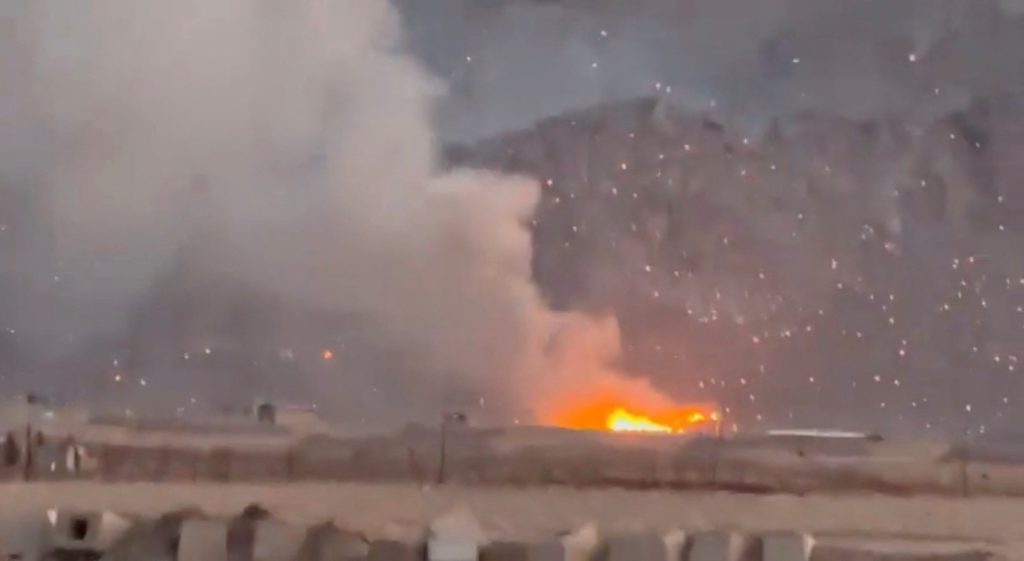
The speech occurred against a backdrop of continued military action. Iranian state media reported that the B1 bridge attack killed at least eight people and wounded 95. In retaliation, Iranian officials stated that missiles and drones struck targets in Israel, Saudi Arabia, the United Arab Emirates, and Kuwait's largest oil refinery. The Iranian President, Masoud Pezeshkian, released an open letter to the American people on Wednesday, arguing that U.S. strikes were planting "seeds of resentment" and asserting that Iran posed no threat to the United States.
Simultaneously, the Trump administration faced a significant legal challenge at the Supreme Court. In an unprecedented move, President Trump attended oral arguments in Trump v. Barbara, a case challenging his executive order to end birthright citizenship for children of undocumented immigrants.
The justices appeared skeptical of the administration's position during the hearing. Justice Neil Gorsuch pressed Solicitor General D. John Sauer on whether Native Americans would lose their citizenship under the order, while Justice Amy Coney Barrett questioned the "messy" outcomes of such a ruling. Chief Justice John Roberts and other justices probed the administration's reliance on "birth tourism" as a justification for reinterpreting the 14th Amendment.
Constitutional law scholars, including Harvard's Laurence Tribe, argued that the administration's position contradicts over a century of legal precedent. However, conservative commentators and outlets defended the President's attendance and the merits of the case, with some suggesting the administration might still secure a ruling that allows Congress to revisit the issue.
The dual focus on the Iran war and immigration policy highlighted a pivotal moment for the administration. While Trump sought to rally his base with promises of military victory and immigration enforcement, the war's economic fallout and the Supreme Court's apparent skepticism presented significant hurdles. The White House has indicated that the administration is amassing "extraordinary executive authority" to prosecute the military operation, even as allies convene in London and New York to discuss reopening the Strait of Hormuz.
As the conflict enters its fifth week, questions remain about whether the U.S. can achieve a swift resolution without further destabilizing the Middle East or triggering a broader regional war.